From Graphic Designer to AI Creative Technologist: What Changed in How I Work
I started as a graphic design teacher in 2017 and today I lead AI creative and automation work at ADPL. The path between was gradual: teaching, multimedia, motion, senior design with UI/UX, leading a small team, and then AI. What changed most was not the tools but how much of the pipeline I now own, from concept to delivery.
Where did it start?
In October 2017 I began teaching graphic design part-time at Agog Education. I covered graphic design, UI/UX and some animation. Teaching shaped me more than I expected. To explain why a layout works, you have to actually know. Students ask "why not this?" and you cannot answer with "it feels right".
Around then I also worked on photo editing, UI/UX and audio-video editing, and later did a short stint in print and digital design. Nothing glamorous, but it taught me to deliver across formats.
What did multimedia and motion add?
From January 2020 I worked as a multimedia designer at EDPRIME, across multimedia, UI/UX, web design and digital communication. That was where design stopped being only static for me. Video, interface and web all lived in one job.
In early 2022 I worked as a senior motion graphic artist on motion, digital and campaign content. Motion taught me timing and rhythm, which I still use every time I edit AI video. A shot that is two seconds too long is wrong whether a camera or a model made it.
Why did I go back to teaching?
From 2022 I worked at TGC Animation and Multimedia as a mentor and trainer, moving up to senior graphic design mentor. I built curriculum around visual communication, digital design and portfolio development, teaching Photoshop, Illustrator, Premiere Pro, After Effects and Figma.
In 2025 I also took guest sessions at Vivekananda Global University on graphic design, video editing, UI/UX and visual communication, with portfolio mentoring. Teaching again made me clearer about my own process. If I cannot write it down for a student, I probably do not understand it.
What did senior design roles change?
At Consulting Engineers Group, from mid 2024 to mid 2025, I worked as a senior graphic designer on UI/UX and digital interfaces, campaign assets, web content, product visuals and video, plus identity systems across digital and print. Work like that rewards consistency: one system, many outputs.
Then I was a senior multimedia designer at ARCH College of Design and Business, where I led a team of six across design, video, social, development and content. Leading people changed how I plan. You write things down, set clear briefs and review work against a standard. I use the same habits today when I brief an AI tool.
When did AI enter the picture?
Gradually, and first as another tool in the set. My older site lists tools like Midjourney, Runway, Firefly, ElevenLabs and ChatGPT among my tools. At first it was images and small experiments. Then video, then workflows, then code.
In October 2025 I joined ADPL as AI Creative and Automation Lead. The role covers AI creative production from concept and script through generative image and video, edit and delivery. It also covers reusable AI workflows for commercial visuals, UGC-style content and brand campaigns, web apps and internal tools, and API automation for Shopify, Meta and internal workflows.
What actually changed in how I work?
Four things, mainly.
- I write more. Briefs, visual descriptions, prompt templates, checklists. Clear writing is now a design skill.
- I build systems, not single assets. If I will make something ten times, I make a repeatable workflow once. My 25 case studies and 50 videos came from that thinking.
- I direct code. I use AI coding assistants to build web apps, then review and test them. I do not claim to type every line, and I do not hide it either. Directing and checking well is a real skill.
- I test more. Generated output looks plausible even when it is wrong. That pushed me to write tests, including tests that fix the clock.
What stayed the same?
Taste, mostly. Layout, colour, type, pacing, sound. The models make options quickly, but someone has to know which option is right and why. My years in graphic design, UI/UX, motion and video are what let me judge. If anything, AI makes that judgement more valuable, because there is so much more output to choose from.
Craft still matters at the end too. I fix things by hand in Photoshop and After Effects when a generator is close but not right.
What are the trade-offs?
I am less of a specialist than I once was. A pure motion designer will out-animate me on any given day, and a software engineer will write cleaner code. My value is the combination: I can take an idea from brief to a finished video or a working app, and I understand each part well enough to direct it.
Tools also change monthly. I try not to build my identity on any one of them. Google Flow, Kling, Seedance and Higgsfield are what I use now; the habits are what I carry forward.
Key takeaways
- My path ran from teaching (2017) through multimedia, motion and senior design to leading a team of six, and now to AI creative and automation work.
- Design judgement is what makes AI output usable.
- The biggest shifts are writing more, building repeatable systems, directing code and testing.
- The combination of skills matters more than any single tool.
The full timeline is on the about page and the resume page. To see what I make, visit the work page, or get in touch.
Questions
Questions
What is an AI creative technologist?
It is someone who combines design and production skills with generative AI, automation and code. In my case that means AI image and video, repeatable workflows, and web apps built with AI-assisted development.
Do you need to code to become a creative technologist?
You need to be comfortable reading and directing code, and building small things that work. You do not need to be a career software engineer, but you do need to test and understand what you ship.
Did your design background help?
Yes, a lot. Taste, layout, motion and editing skills decide whether AI output is good or just fast. The tools changed; the judgement did not.
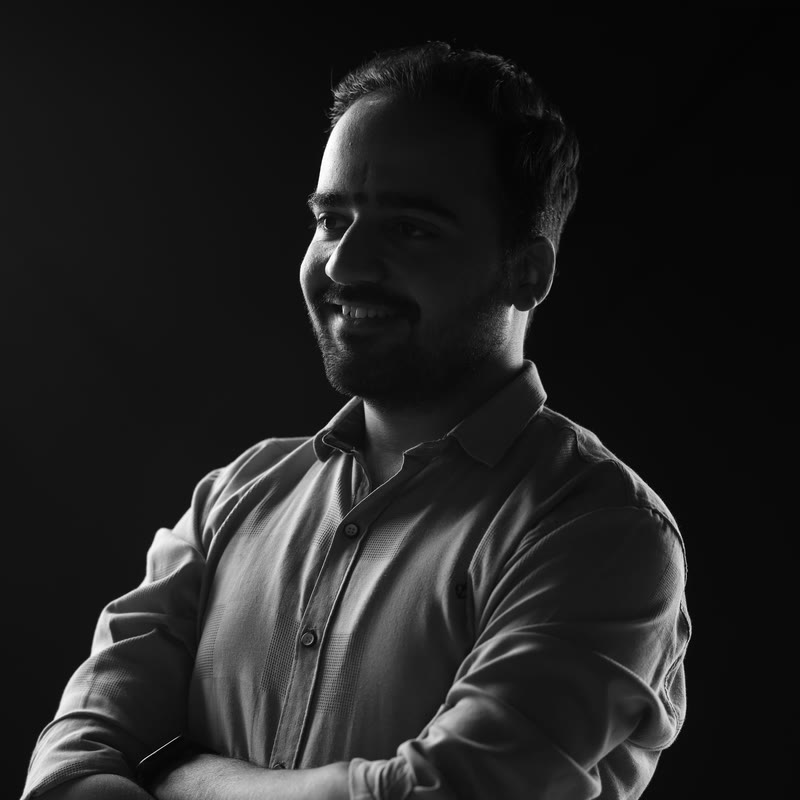
Nikhil Dadhich is an AI Creative Technologist in Jaipur, India. He designs and builds AI image and video production workflows, creative automation and web apps, with a background in graphic design, UI/UX and motion since 2017. More about me.