Case study · Retail & e-commerce · 2026
Plumkiln.
An online store for a small home-goods studio, from first browse to the doorstep.
Overview
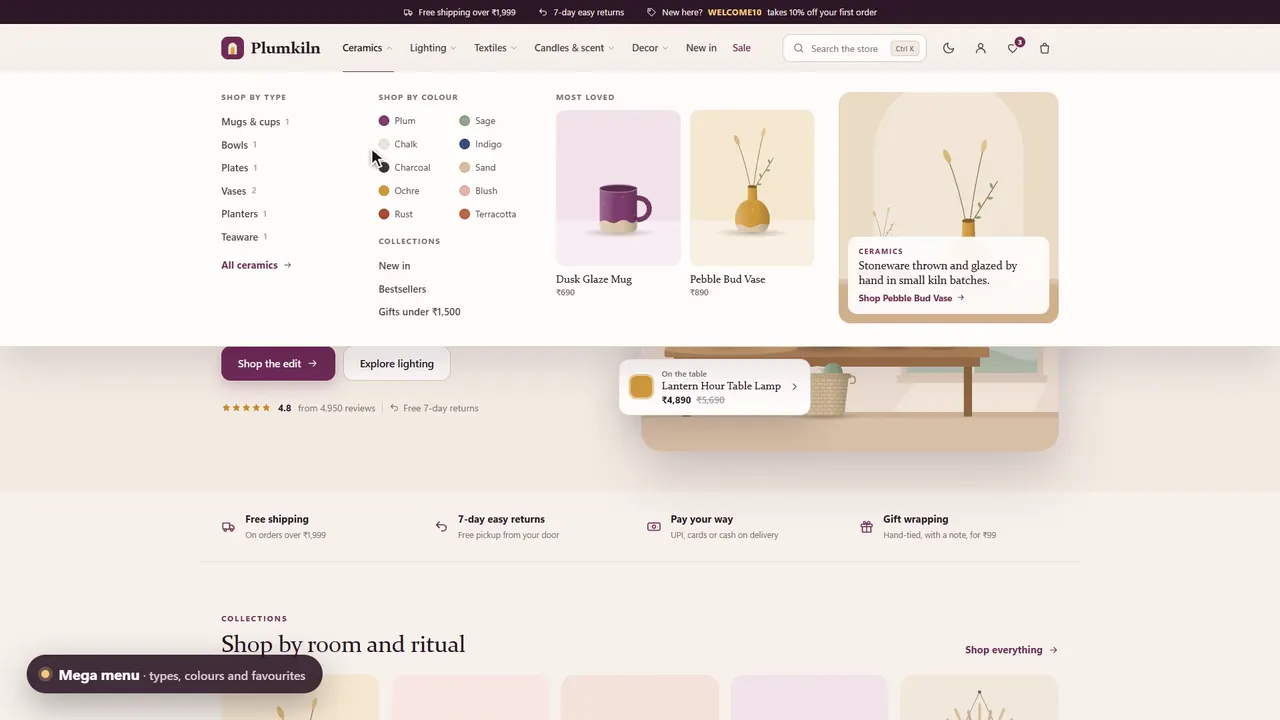
A shop with filters, clear product pages and a short checkout for a studio that sells ceramics, lamps, textiles and candles. Plus order tracking and easy returns.
Who is it for?
Problem → solution
Small doubts that make people leave a small shop's site, and what the store does about each one.
- Problem 01
Shoppers can't tell when a parcel will arrive.
What the app doesType a PIN code on any product to see the delivery day and cost.
- Problem 02
After paying, buyers keep asking where their order is.
What the app doesA tracking page with each step, the parcel's route and every update.
- Problem 03
Returns mean printing labels and finding a courier.
What the app doesPick the items and a day. The courier collects from the door.
Key features
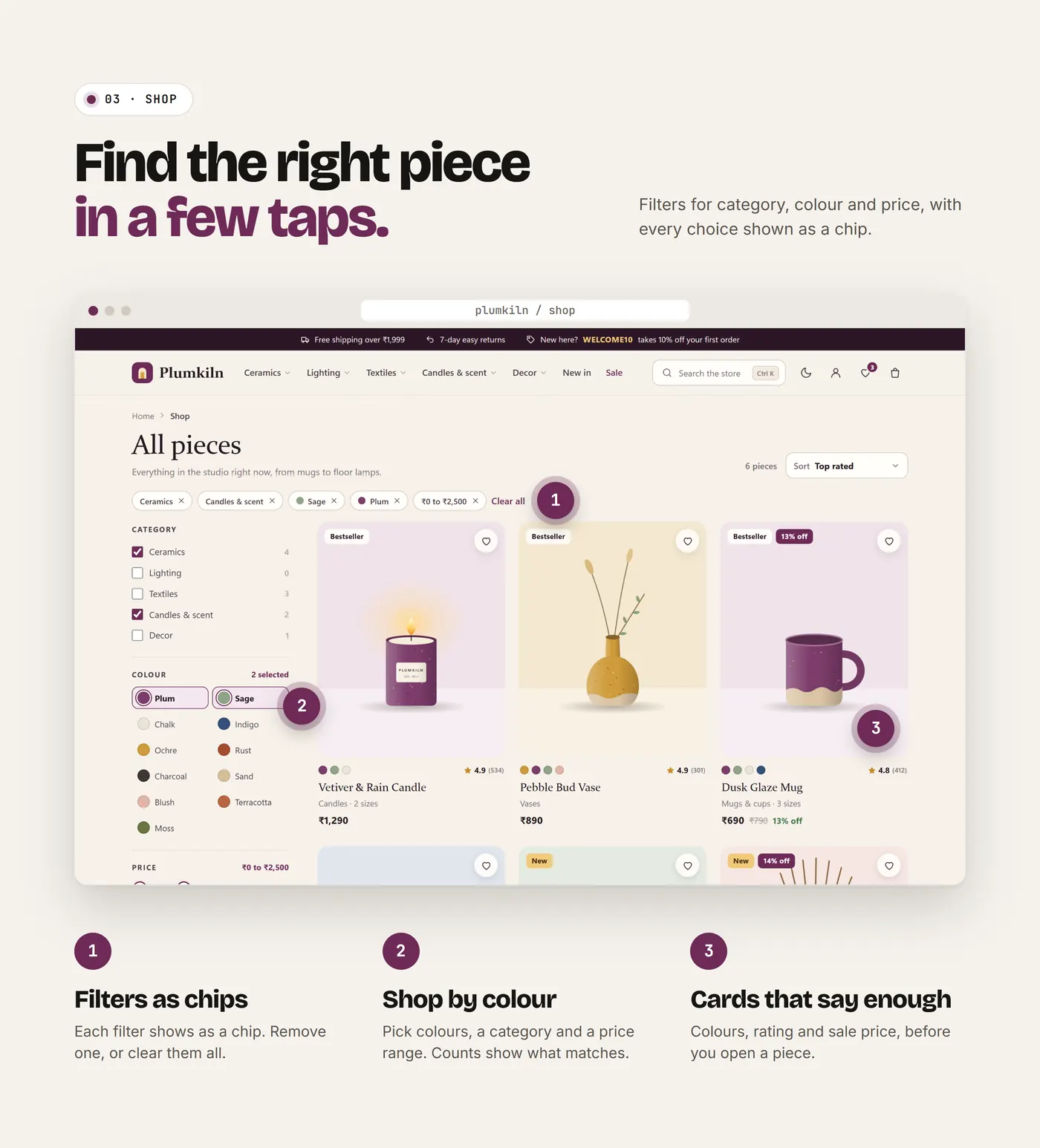
Find the right piece in a few taps.
Filters for category, colour and price, with every choice shown as a chip.
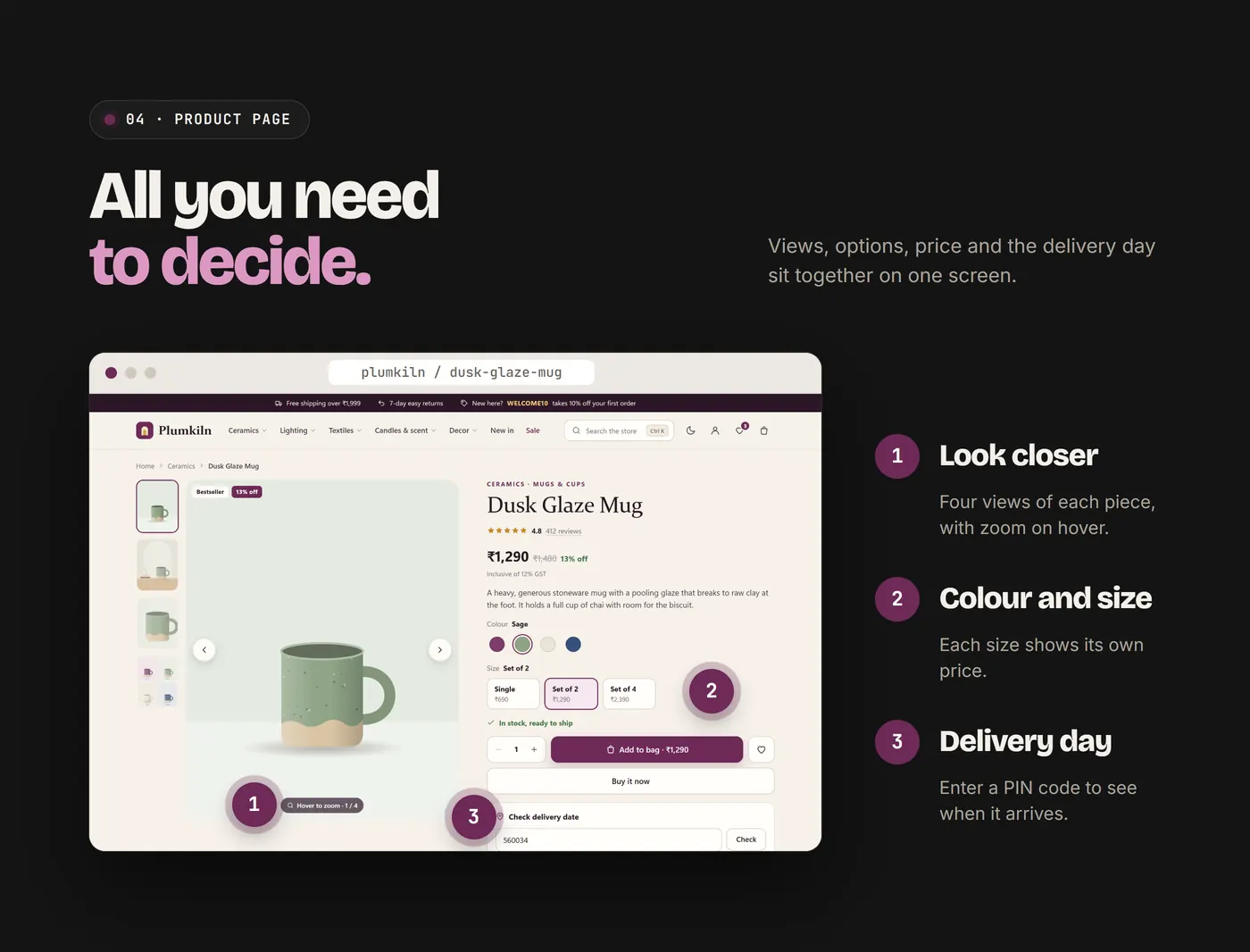
All you need to decide.
Views, options, price and the delivery day sit together on one screen.
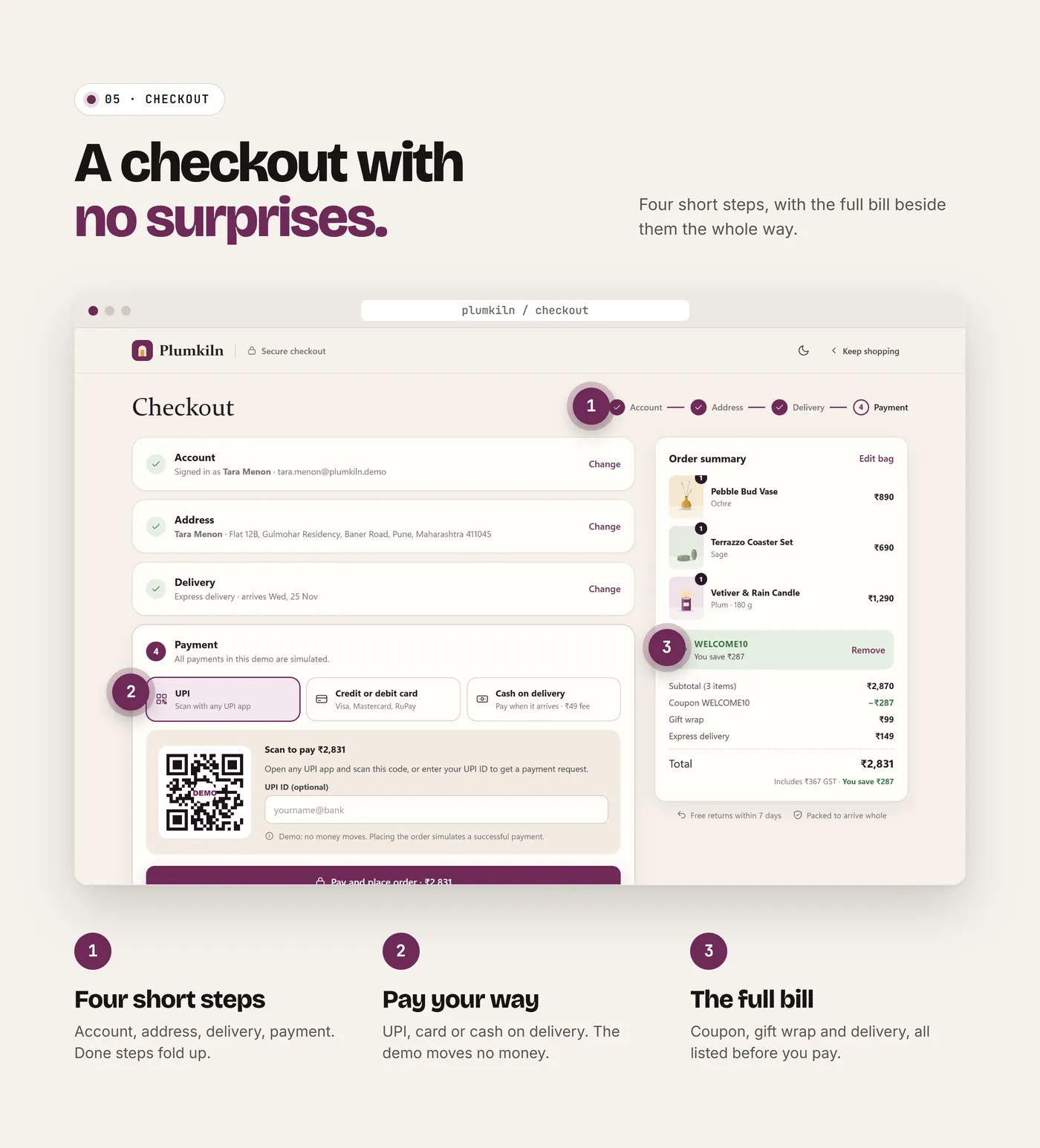
A checkout with no surprises.
Four short steps, with the full bill beside them the whole way.
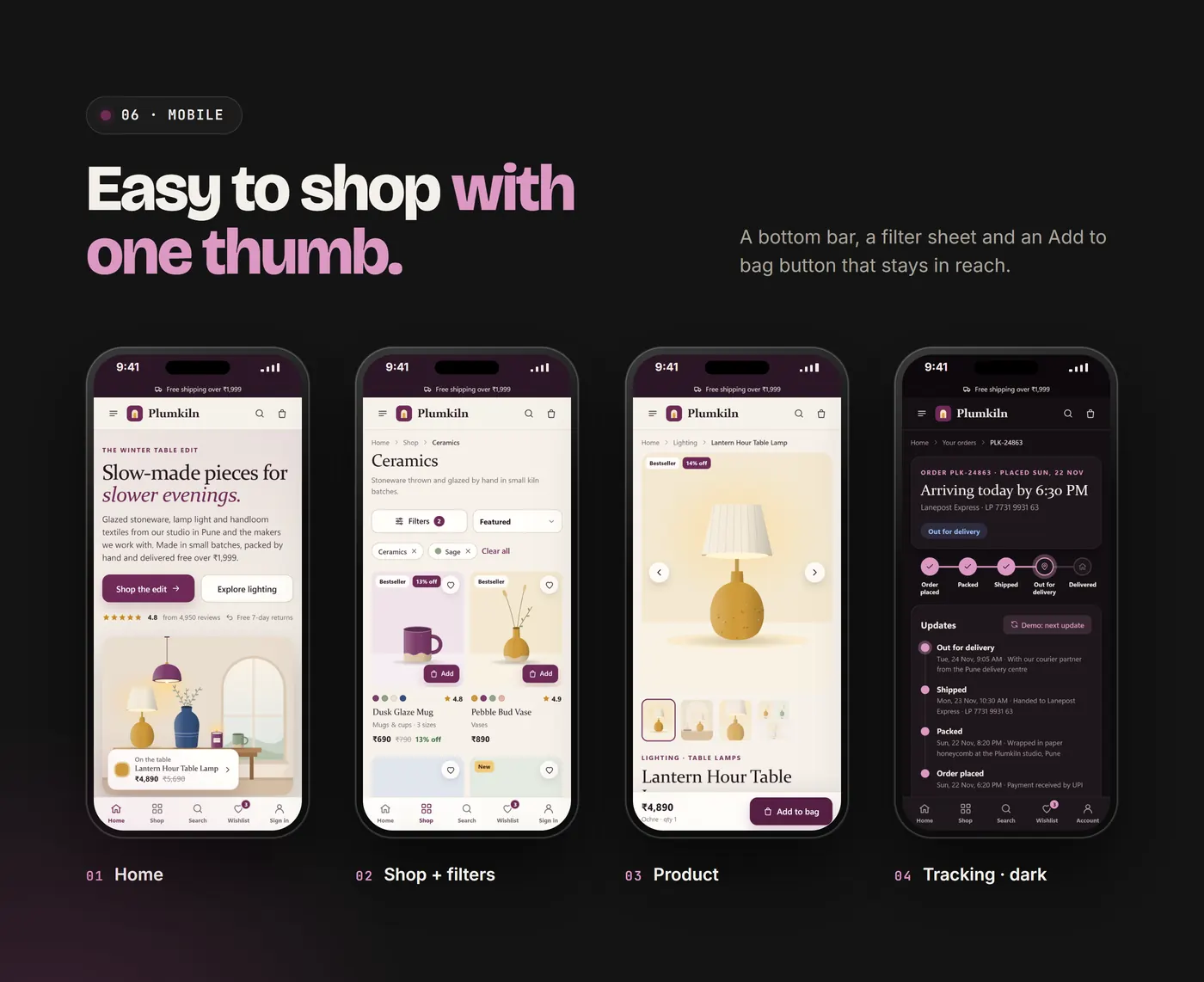
On a phone
Easy to shop with one thumb. A bottom bar, a filter sheet and an Add to bag button that stays in reach.
Design system
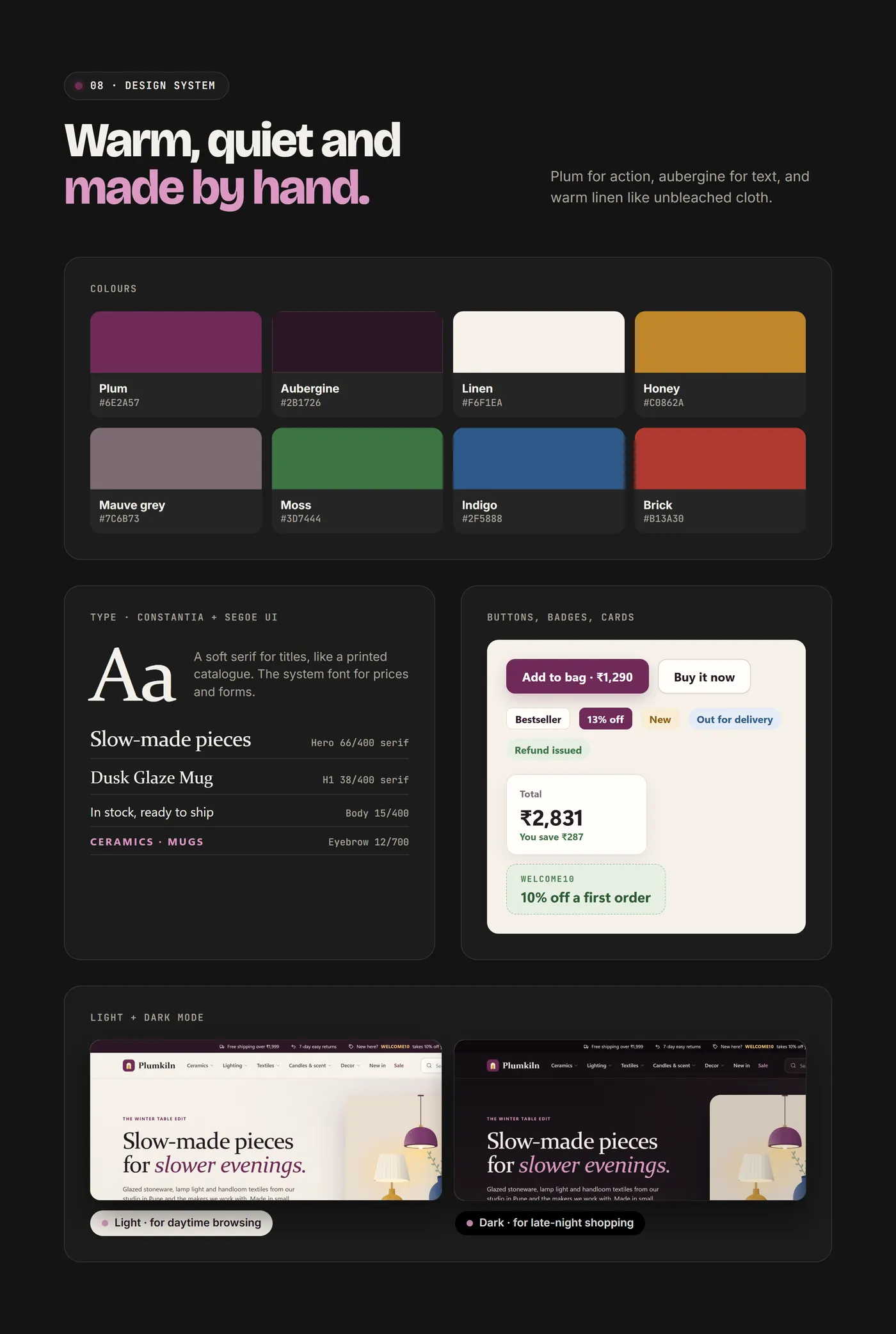
Warm, quiet and made by hand. Plum for action, aubergine for text, and warm linen like unbleached cloth.
#6E2A57#2B1726#F6F1EA#C0862A#7C6B73#3D7444#2F5888#B13A30Type: Constantia + Segoe UI
How it was built
- Plain HTML, CSS and JavaScript: no framework, fast on a phone.
- Built with AI-assisted development: I set the brief, flows and design rules, then directed and reviewed the code.
- Light and dark mode, and layouts for desktop, tablet and phone.
- Sample data that moves with today's date and is saved in the visitor's browser.
- An automated end-to-end test (Playwright) clicks every button, and runs again on fixed dates such as 31 December and 1 April.
- Concept project: the brand, people and data are fictional.