Case study · Retail & e-commerce · 2026
Parcelfern.
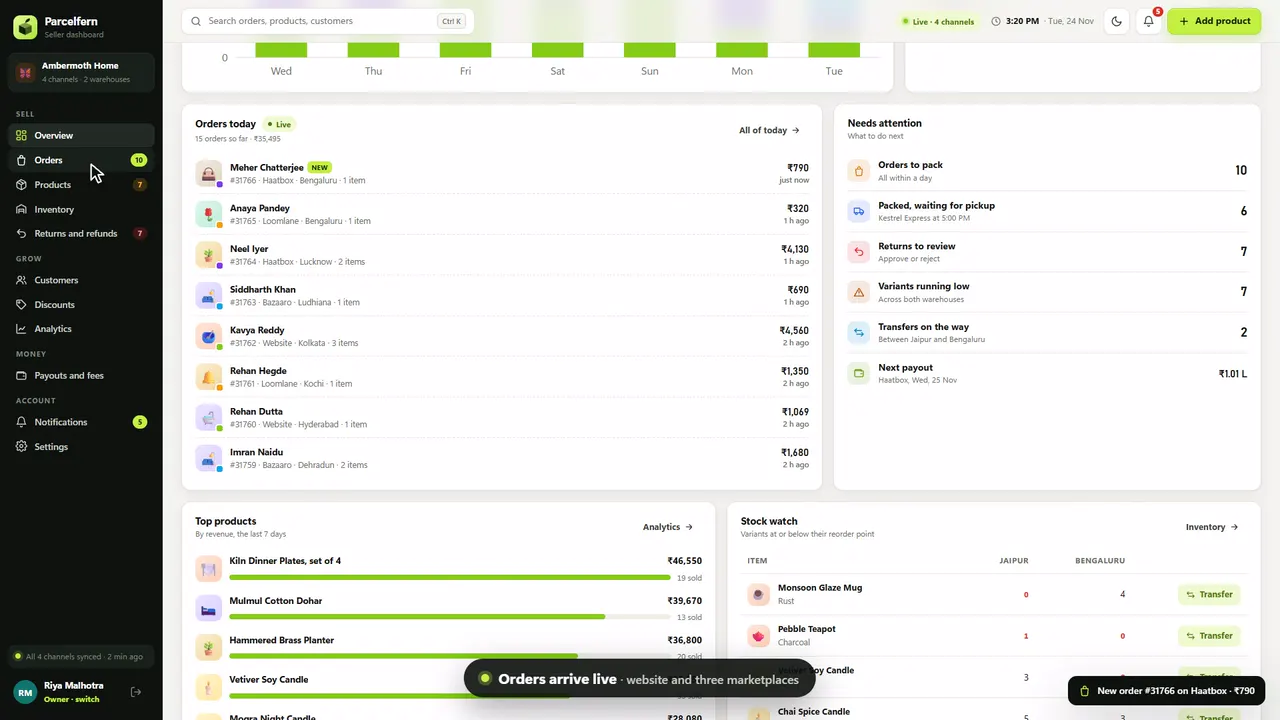
A seller dashboard for orders, stock, returns and payouts across four sales channels.
Overview
One order list for a shop's own website and three marketplaces, stock in two warehouses and payouts after every fee. Plus returns, customers, coupons and analytics.
Who is it for?
Problem → solution
Everyday pains of a small shop that sells in four places, and what the app does about each one.
- Problem 01
Orders sit in four seller panels, each with its own login.
What the app doesEvery channel lands in one order list, with a chip per channel.
- Problem 02
You find out a product is gone only after someone orders it.
What the app doesEach variant warns you at its reorder point, per warehouse.
- Problem 03
Return requests get lost between emails, chats and panels.
What the app doesOne queue to approve, book a pickup and refund.
Key features
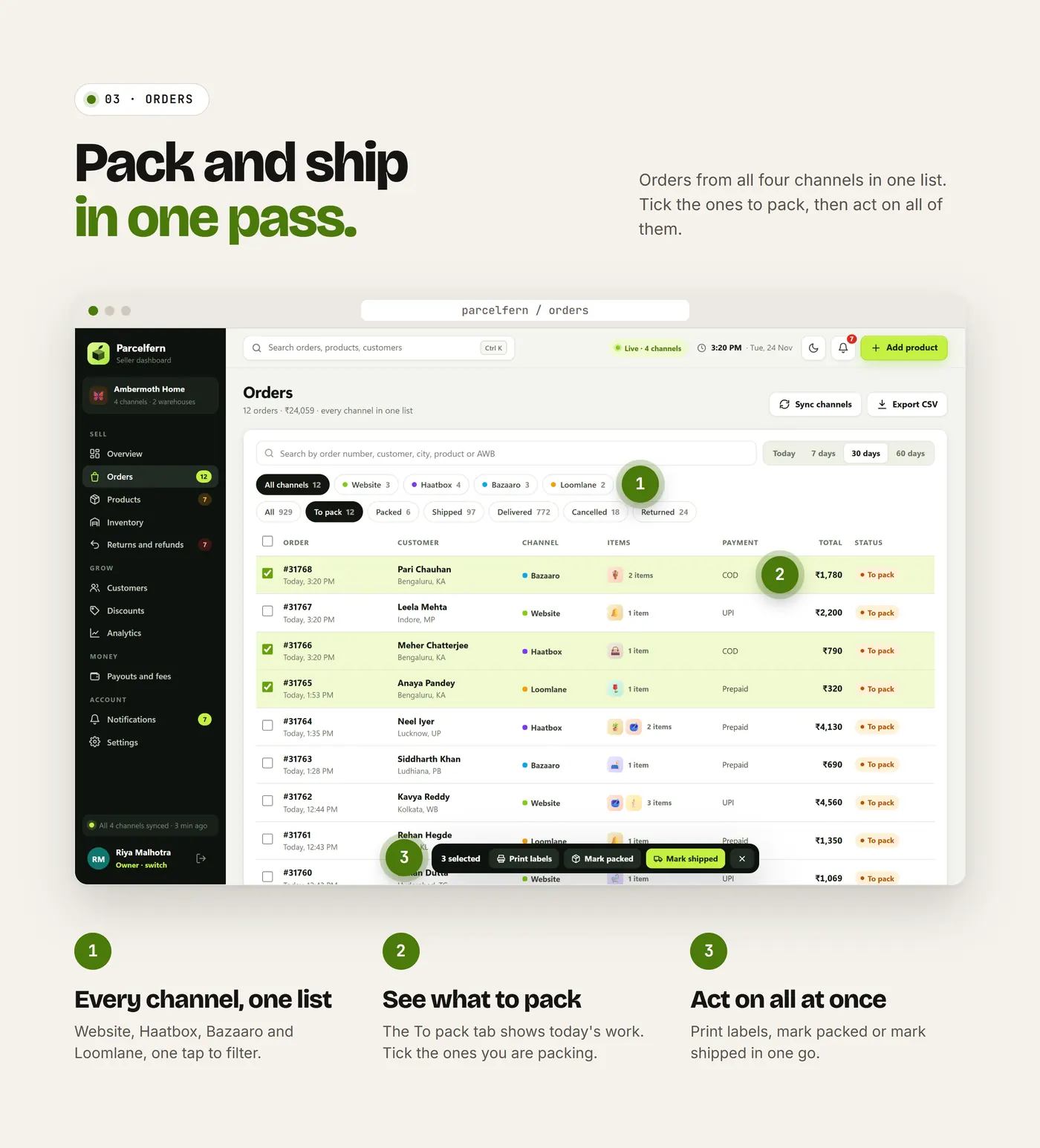
Pack and ship in one pass.
Orders from all four channels in one list. Tick the ones to pack, then act on all of them.
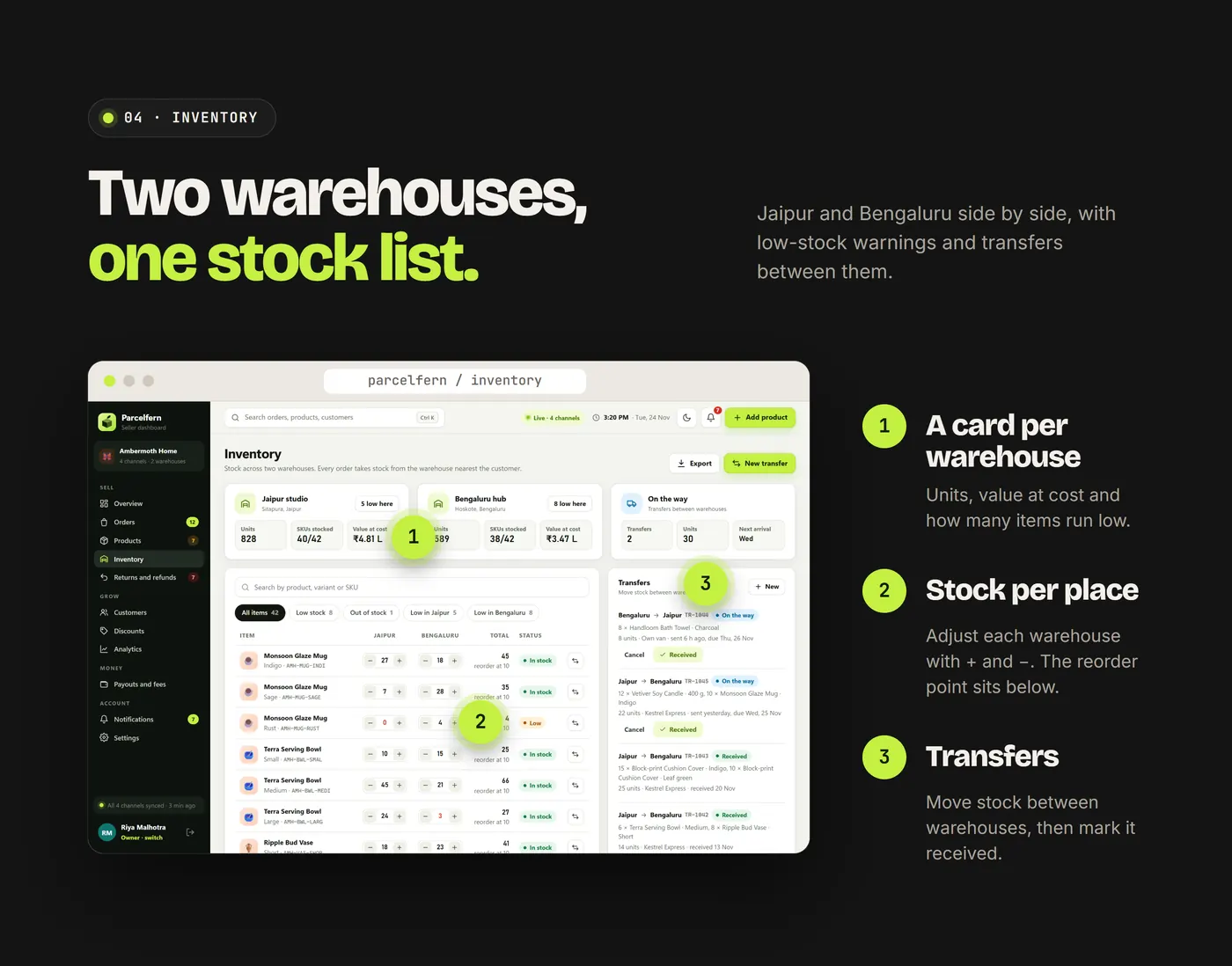
Two warehouses, one stock list.
Jaipur and Bengaluru side by side, with low-stock warnings and transfers between them.
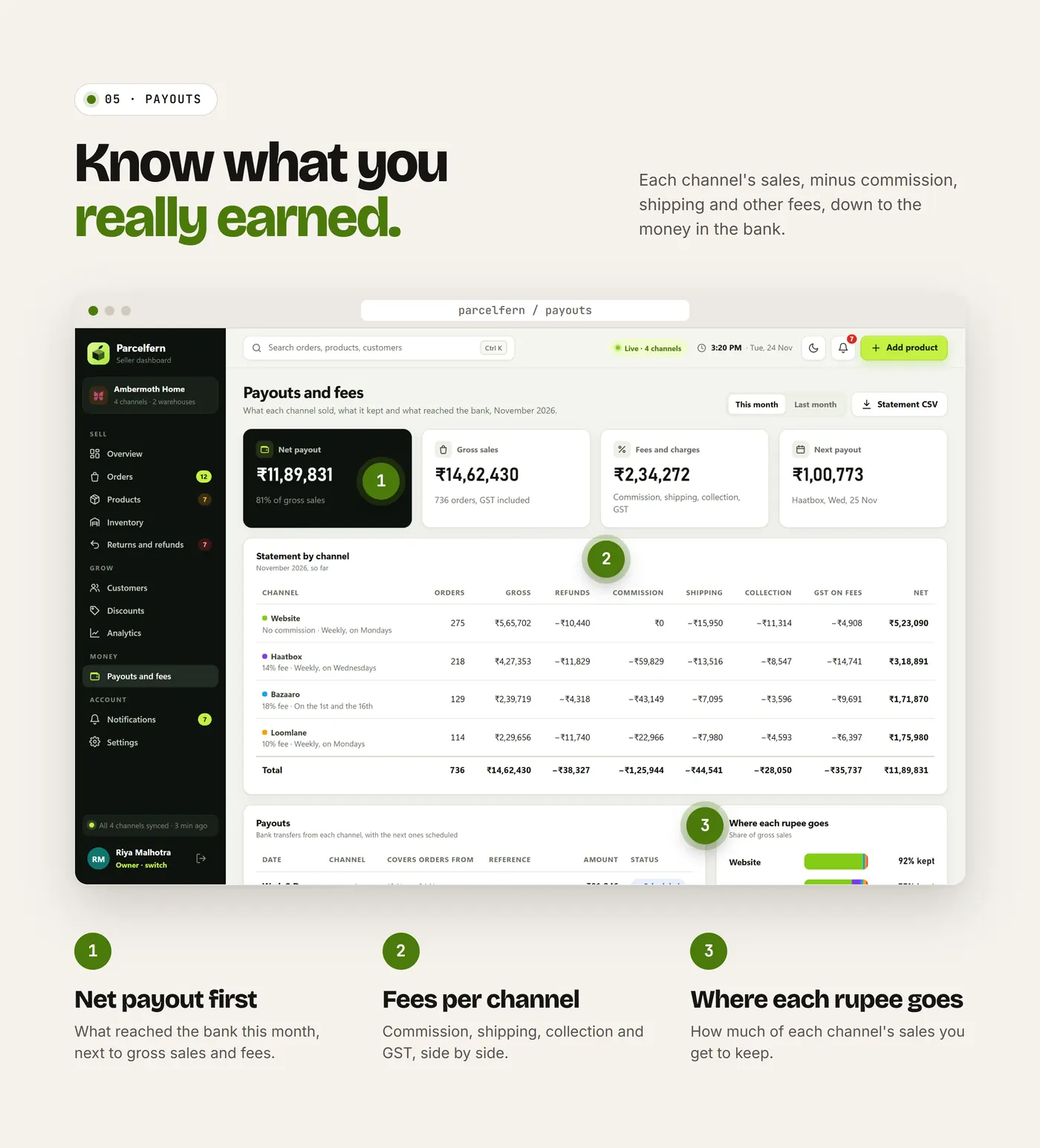
Know what you really earned.
Each channel's sales, minus commission, shipping and other fees, down to the money in the bank.
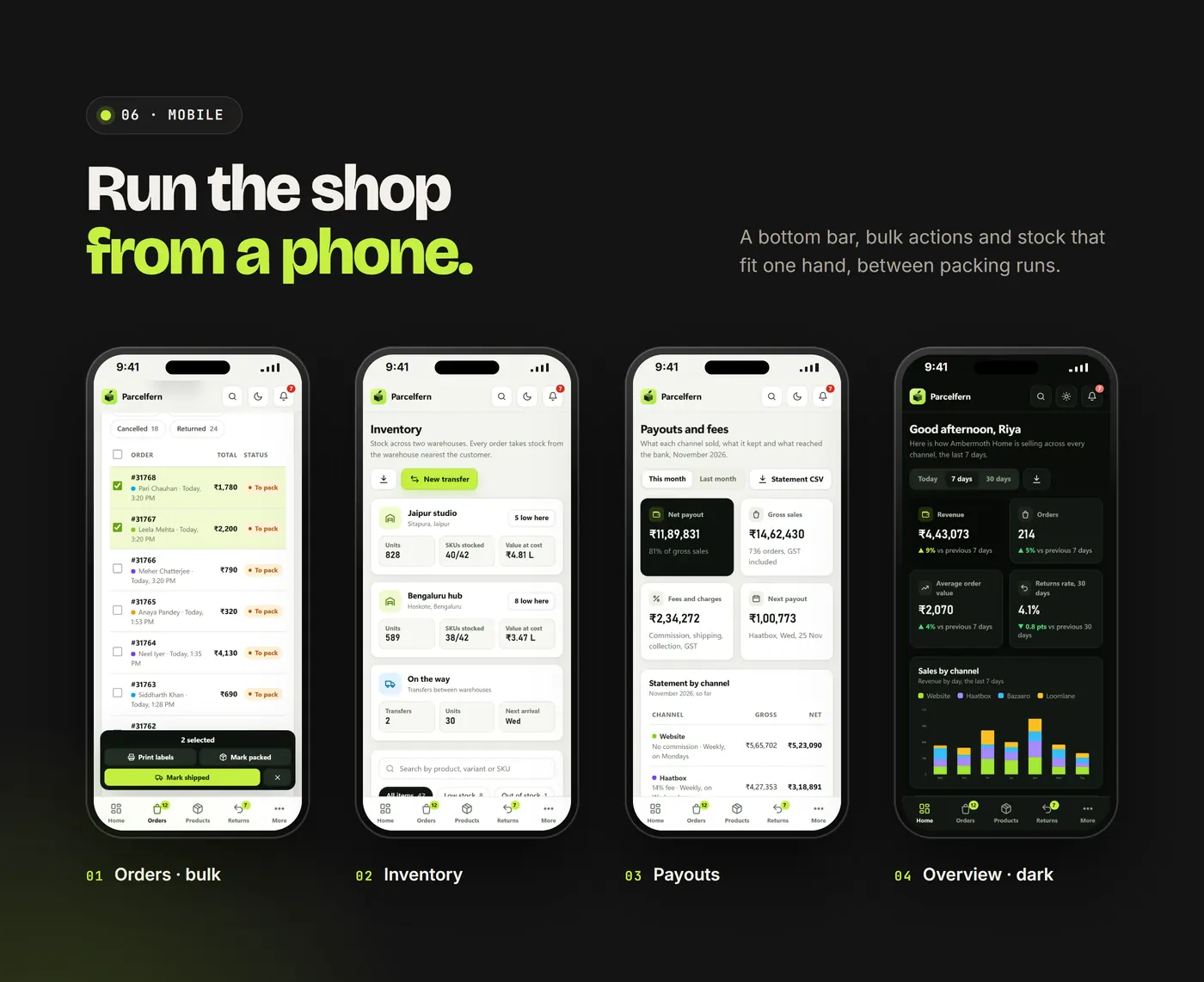
On a phone
Run the shop from a phone. A bottom bar, bulk actions and stock that fit one hand, between packing runs.
Design system
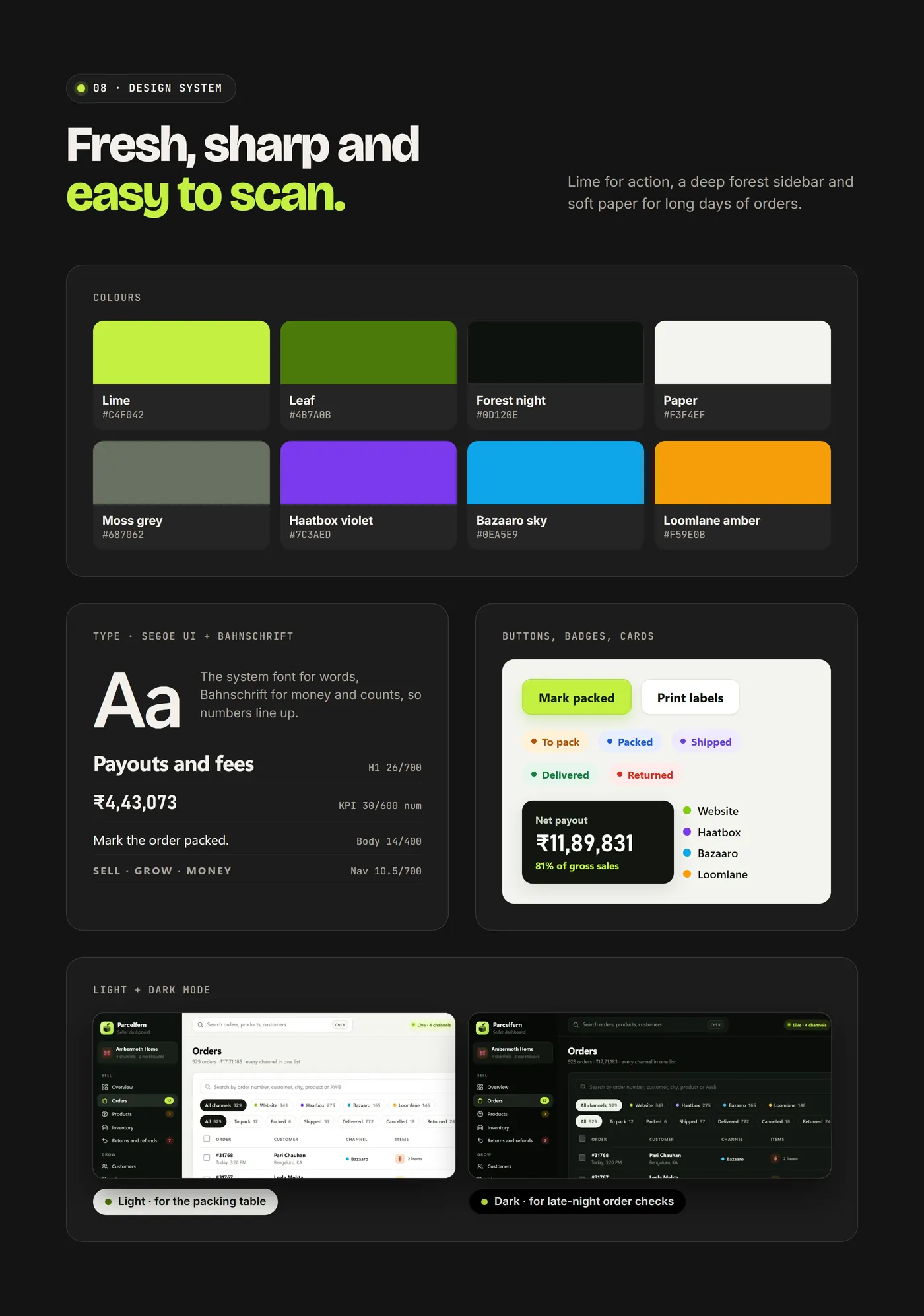
Fresh, sharp and easy to scan. Lime for action, a deep forest sidebar and soft paper for long days of orders.
#C4F042#4B7A0B#0D120E#F3F4EF#687062#7C3AED#0EA5E9#F59E0BType: Segoe UI + Bahnschrift
How it was built
- Plain HTML, CSS and JavaScript: no framework, fast on a phone.
- Built with AI-assisted development: I set the brief, flows and design rules, then directed and reviewed the code.
- Light and dark mode, and layouts for desktop, tablet and phone.
- Sample data that moves with today's date and is saved in the visitor's browser.
- An automated end-to-end test (Playwright) clicks every button, and runs again on fixed dates such as 31 December and 1 April.
- Concept project: the brand, people and data are fictional.