Case study · Restaurants & food · 2026
Bowlmoon.
A food ordering website for one restaurant, with live order tracking and an owner side.
Overview
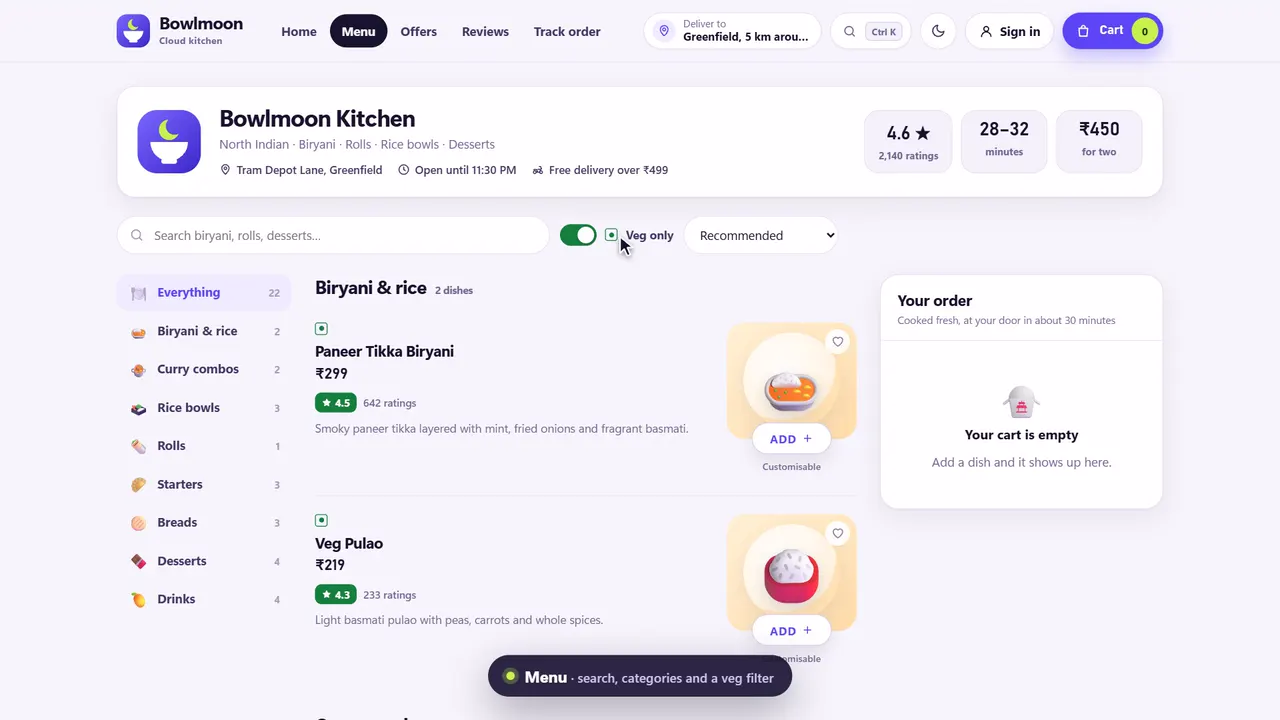
A menu and cart, a checkout and live order tracking for one late-night kitchen, on its own website. Plus offers, reviews, accounts and an owner side.
Who is it for?
Problem → solution
Everyday pains of ordering food for delivery, and what the website does about each one.
- Problem 01
Phone orders get misheard: wrong size, missed extras.
What the app doesGuests pick the size and add-ons themselves, with the price shown.
- Problem 02
Hungry guests keep calling to ask where the food is.
What the app doesA live map and a minute countdown answer before they ask.
- Problem 03
The owner only counts the day's sales after closing.
What the app doesSales by hour and how guests paid update with every order.
Key features
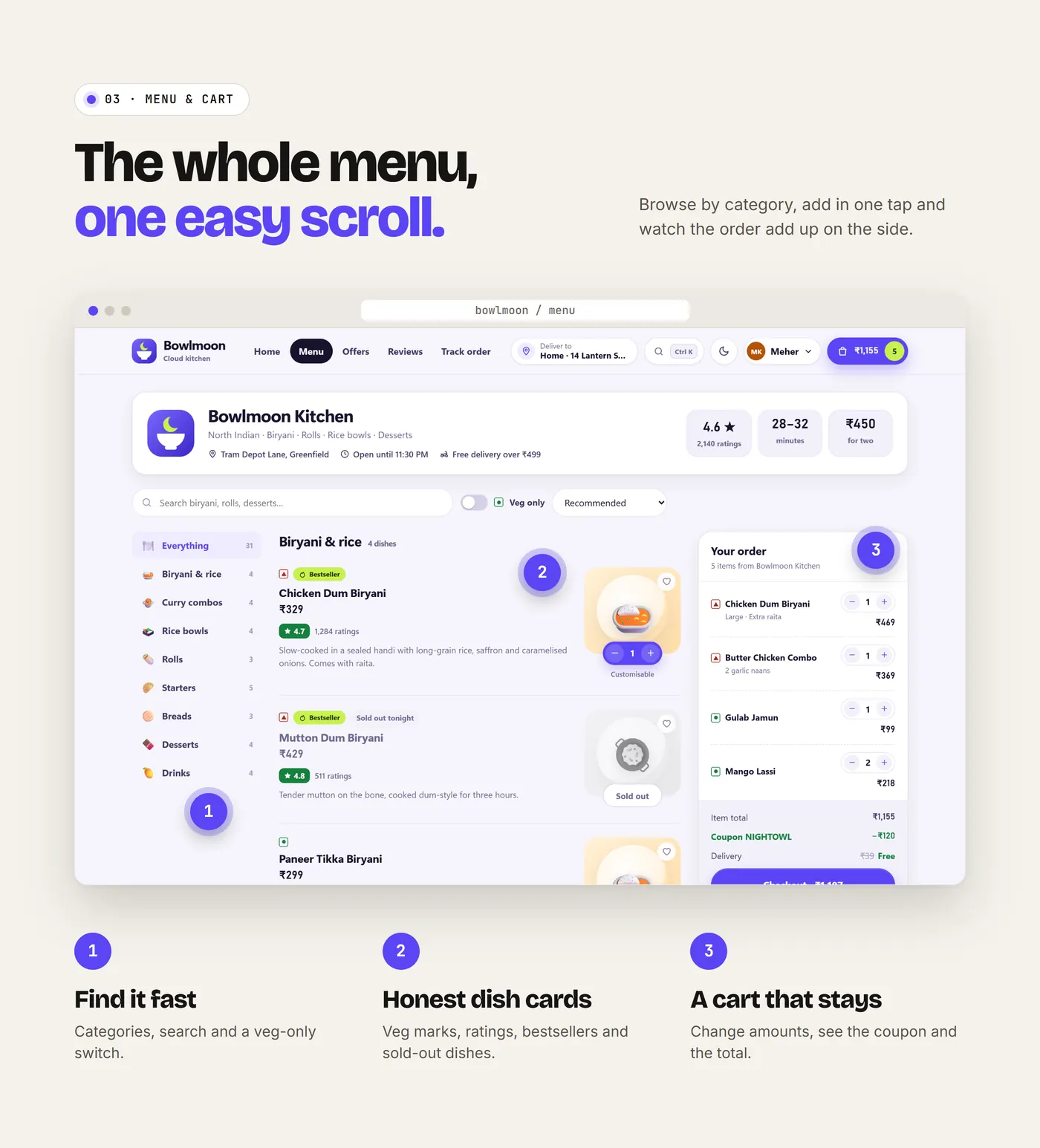
The whole menu, one easy scroll.
Browse by category, add in one tap and watch the order add up on the side.
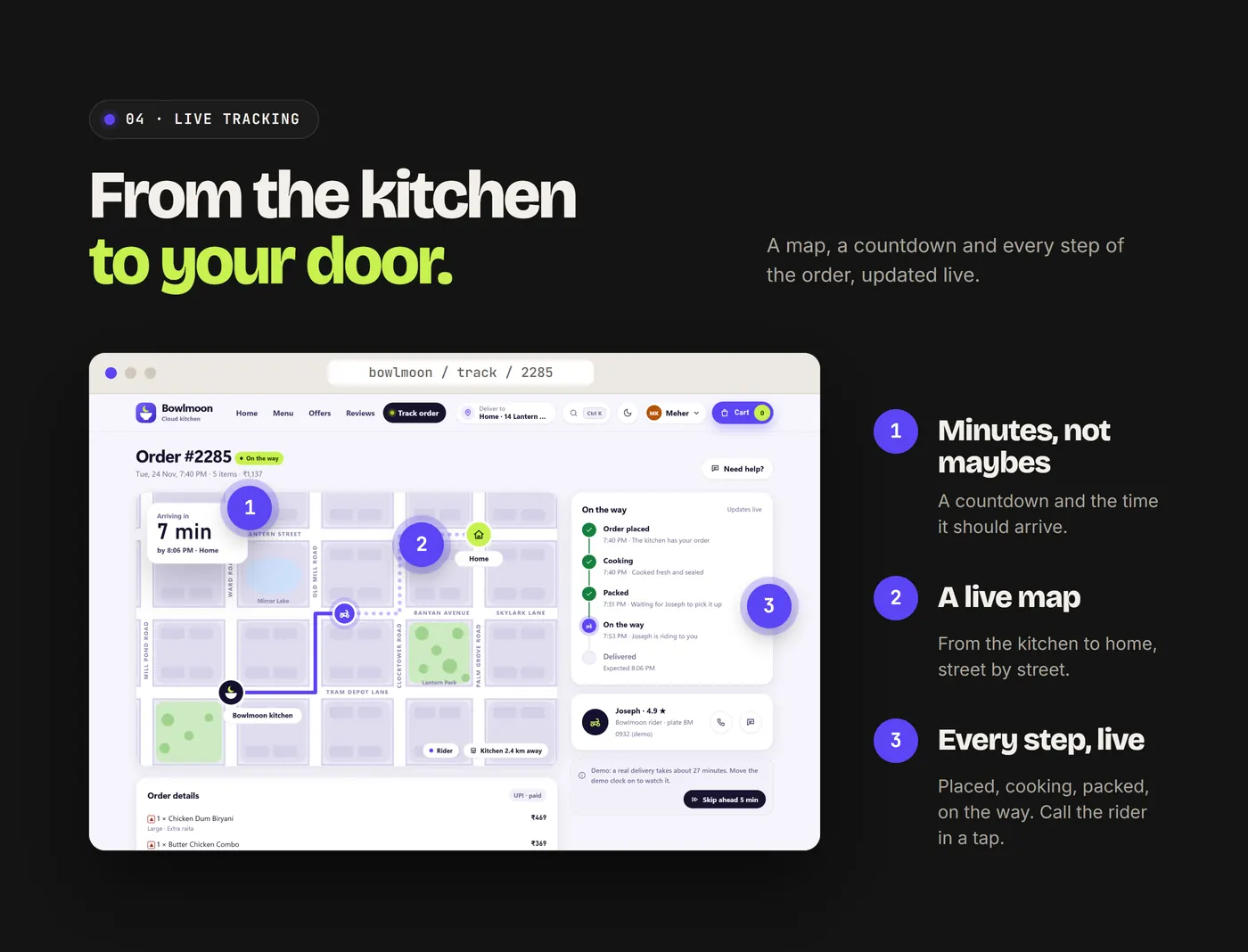
From the kitchen to your door.
A map, a countdown and every step of the order, updated live.
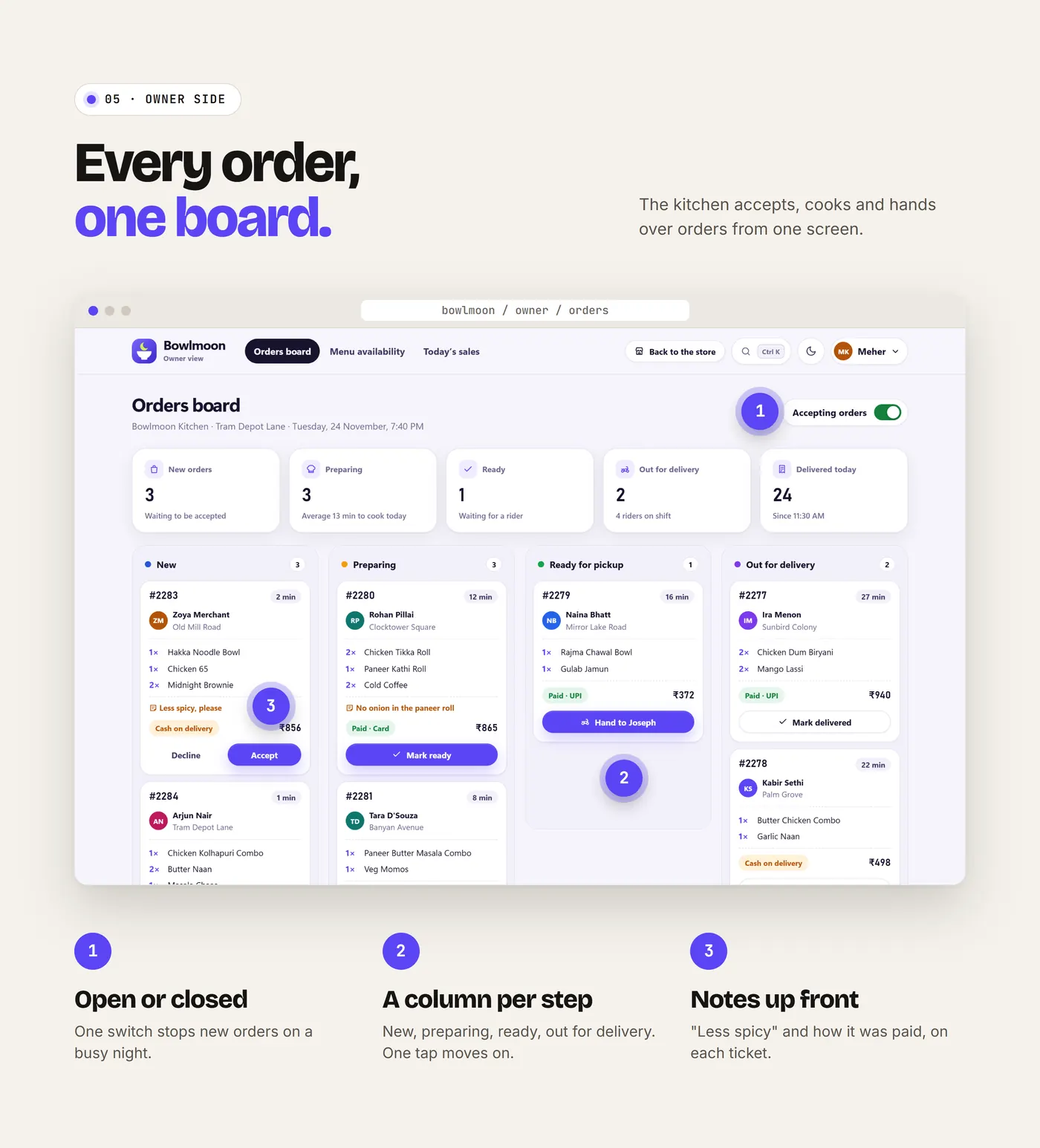
Every order, one board.
The kitchen accepts, cooks and hands over orders from one screen.
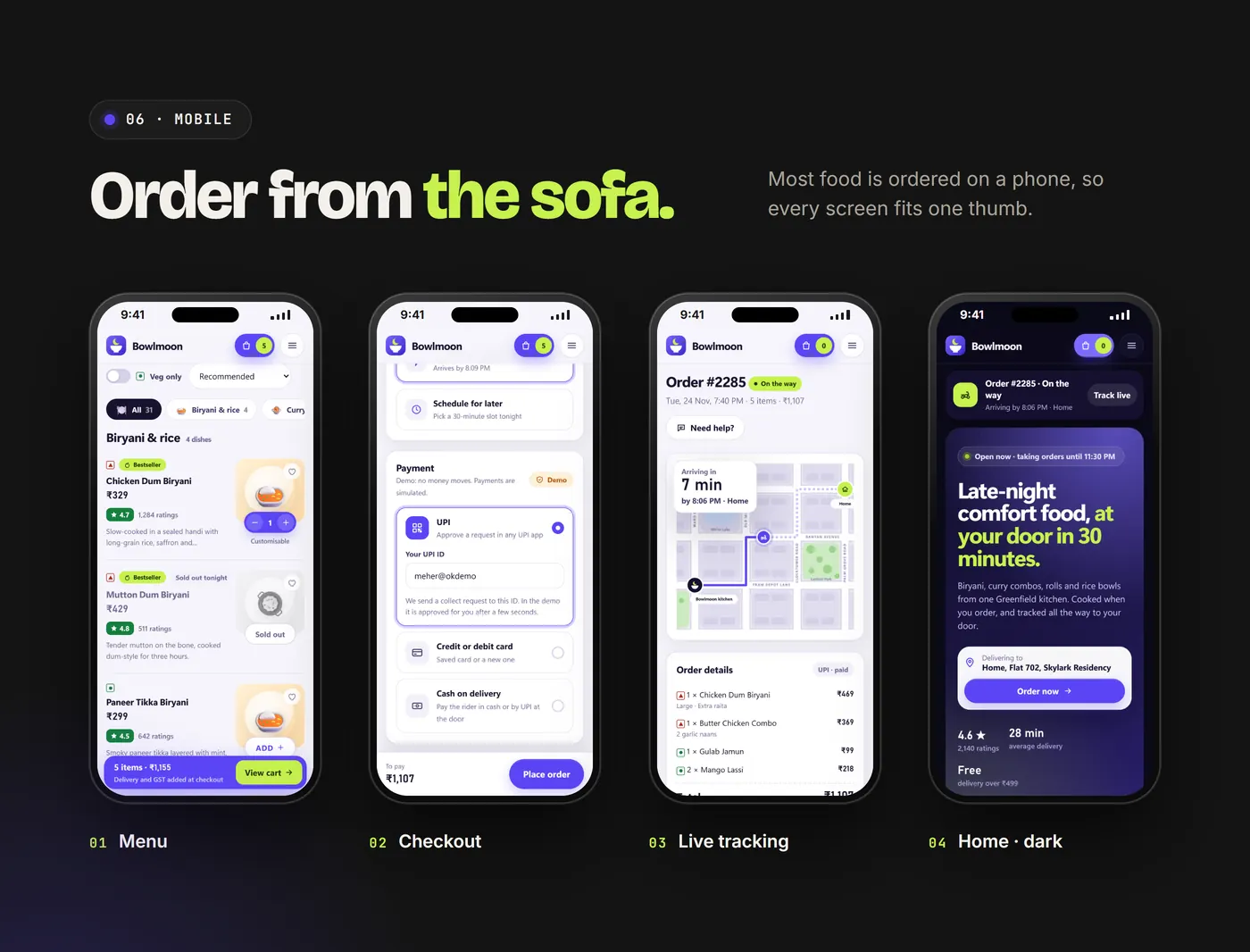
On a phone
Order from the sofa. Most food is ordered on a phone, so every screen fits one thumb.
Design system
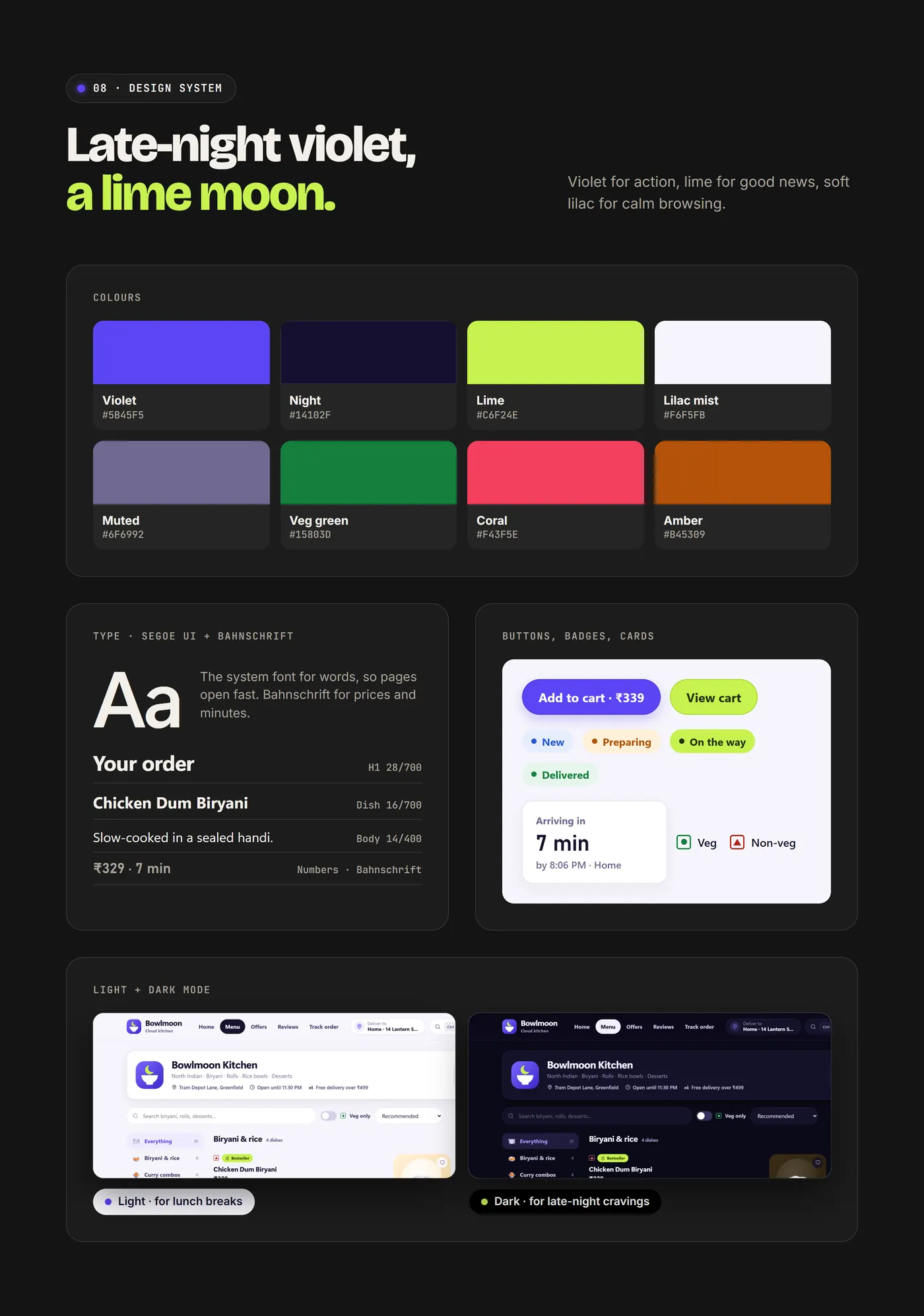
Late-night violet, a lime moon. Violet for action, lime for good news, soft lilac for calm browsing.
#5B45F5#14102F#C6F24E#F6F5FB#6F6992#15803D#F43F5E#B45309Type: Segoe UI + Bahnschrift
How it was built
- Plain HTML, CSS and JavaScript: no framework, fast on a phone.
- Built with AI-assisted development: I set the brief, flows and design rules, then directed and reviewed the code.
- Light and dark mode, and layouts for desktop, tablet and phone.
- Sample data that moves with today's date and is saved in the visitor's browser.
- An automated end-to-end test (Playwright) clicks every button, and runs again on fixed dates such as 31 December and 1 April.
- Concept project: the brand, people and data are fictional.