Case study · Automotive · 2026
Gasketlane.
A garage job card web app: check-in, a bay board, estimates the customer approves, and GST bills.
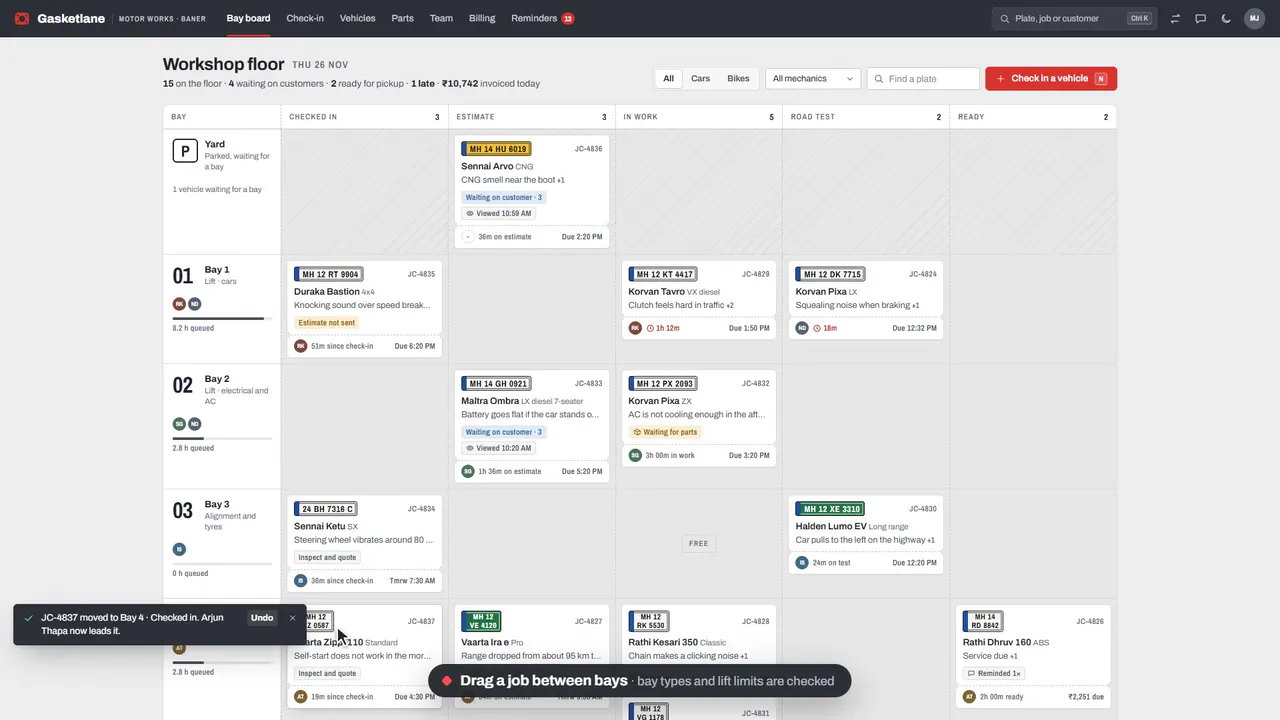
Overview
A bay board, a check-in job card and an estimate link for one independent car and bike garage, in a single web app. Plus parts, mechanics' time, GST bills and reminders.
Who is it for?
Problem → solution
Everyday pains at a busy garage counter, and what the app does about each one.
- Problem 01
Nobody is sure which car is in which bay, or what comes next.
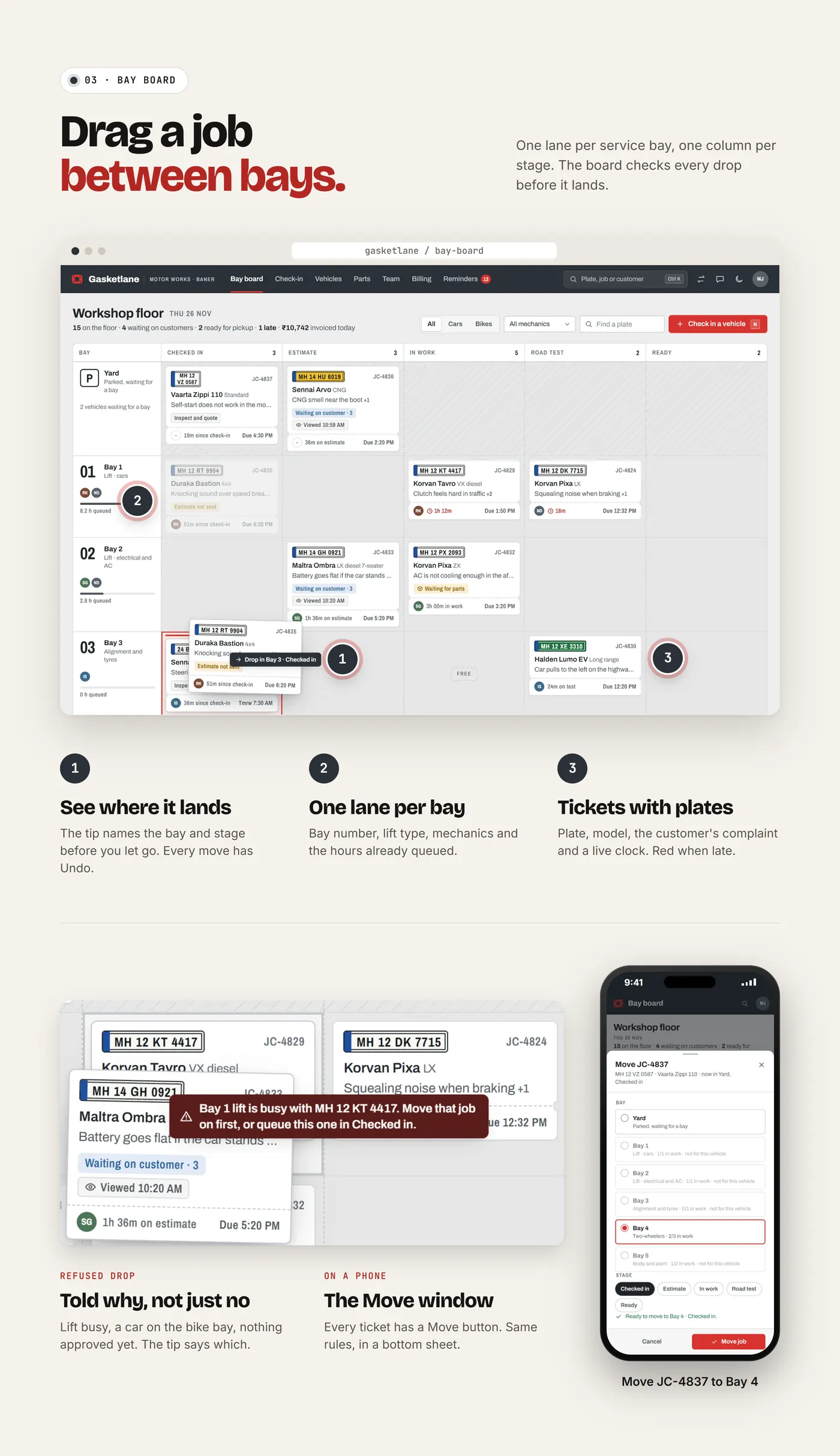
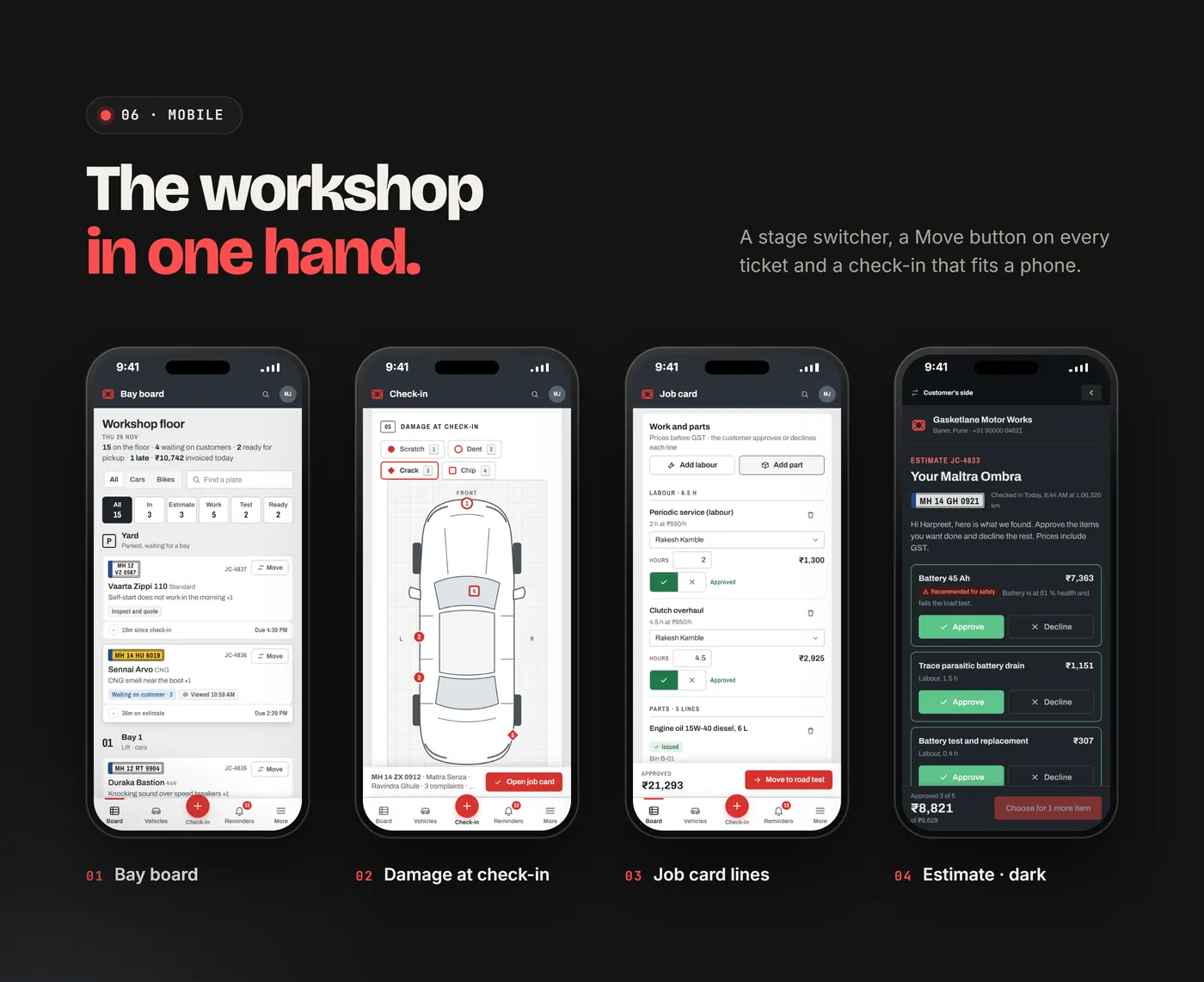
What the app doesA bay board. Drag each job ticket to its bay and stage.
- Problem 02
At pickup, the customer says the dent was not there before.
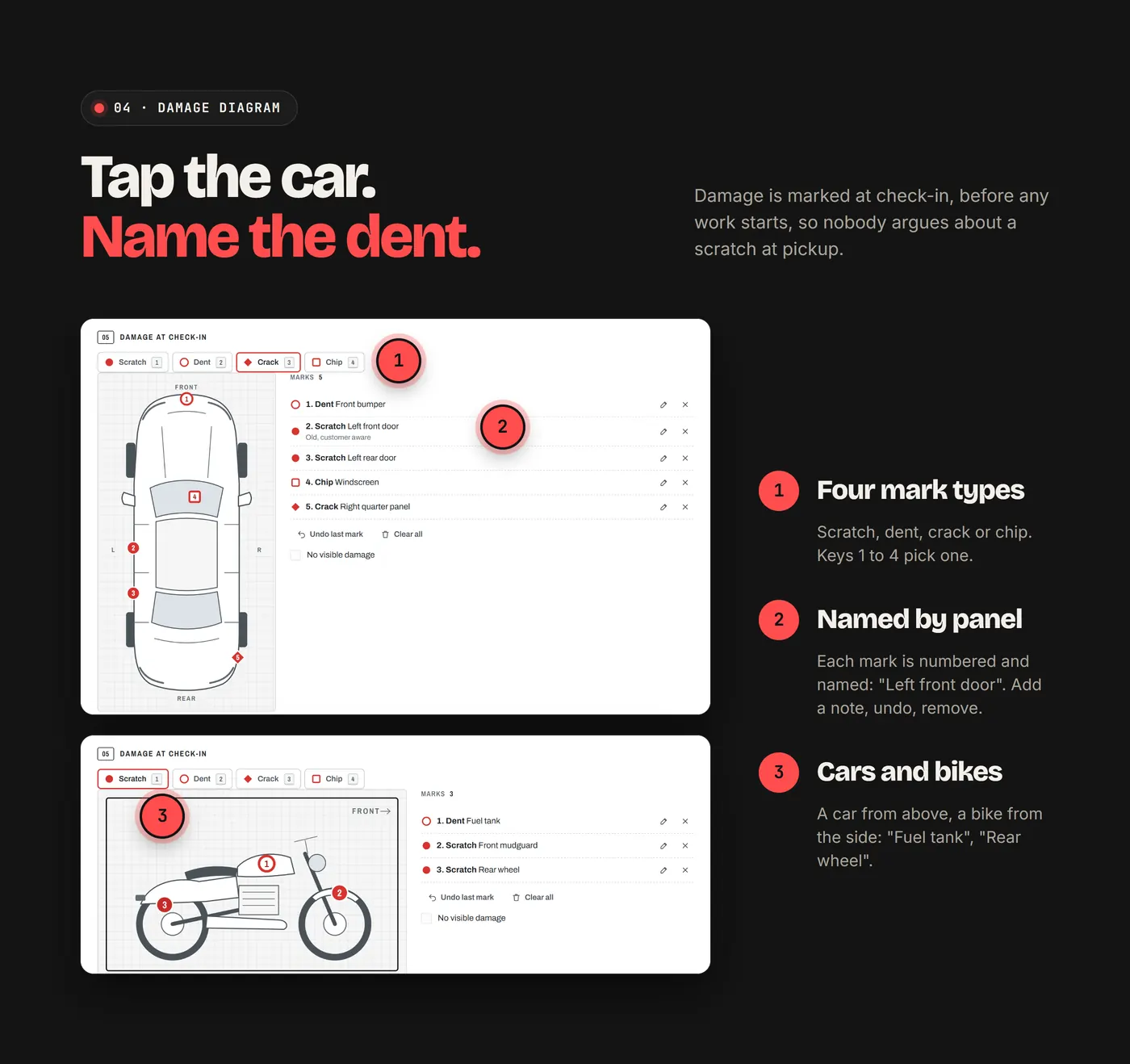
What the app doesDamage is marked at check-in, numbered and named by panel.
- Problem 03
The bill is a surprise, and work waits on phone calls.
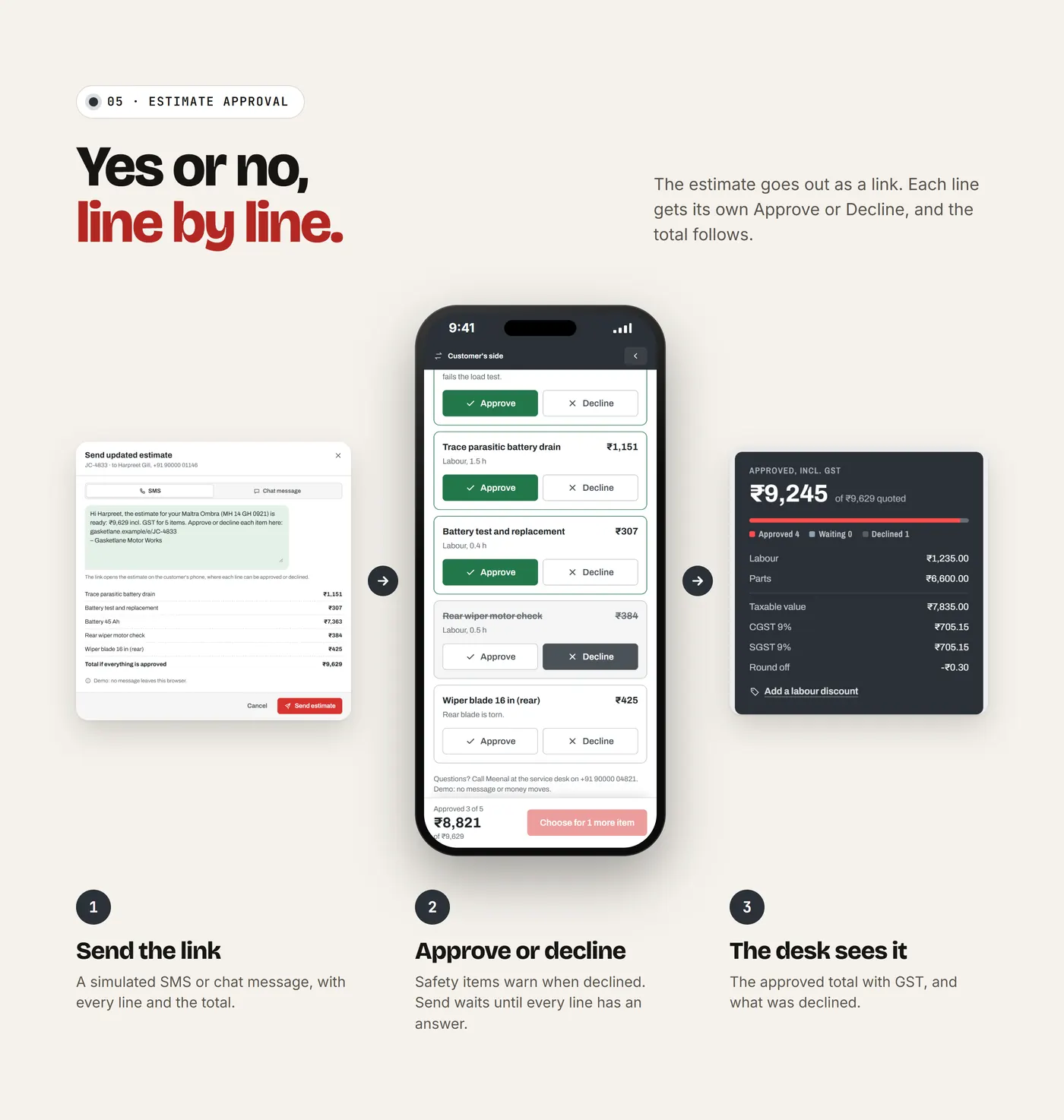
What the app doesThe customer approves or declines each line from a link. The total follows.
Key features
Drag a job between bays.
One lane per service bay, one column per stage. The board checks every drop before it lands.
Tap the car. Name the dent.
Damage is marked at check-in, before any work starts, so nobody argues about a scratch at pickup.
Yes or no, line by line.
The estimate goes out as a link. Each line gets its own Approve or Decline, and the total follows.
On a phone
The workshop in one hand. A stage switcher, a Move button on every ticket and a check-in that fits a phone.
Design system
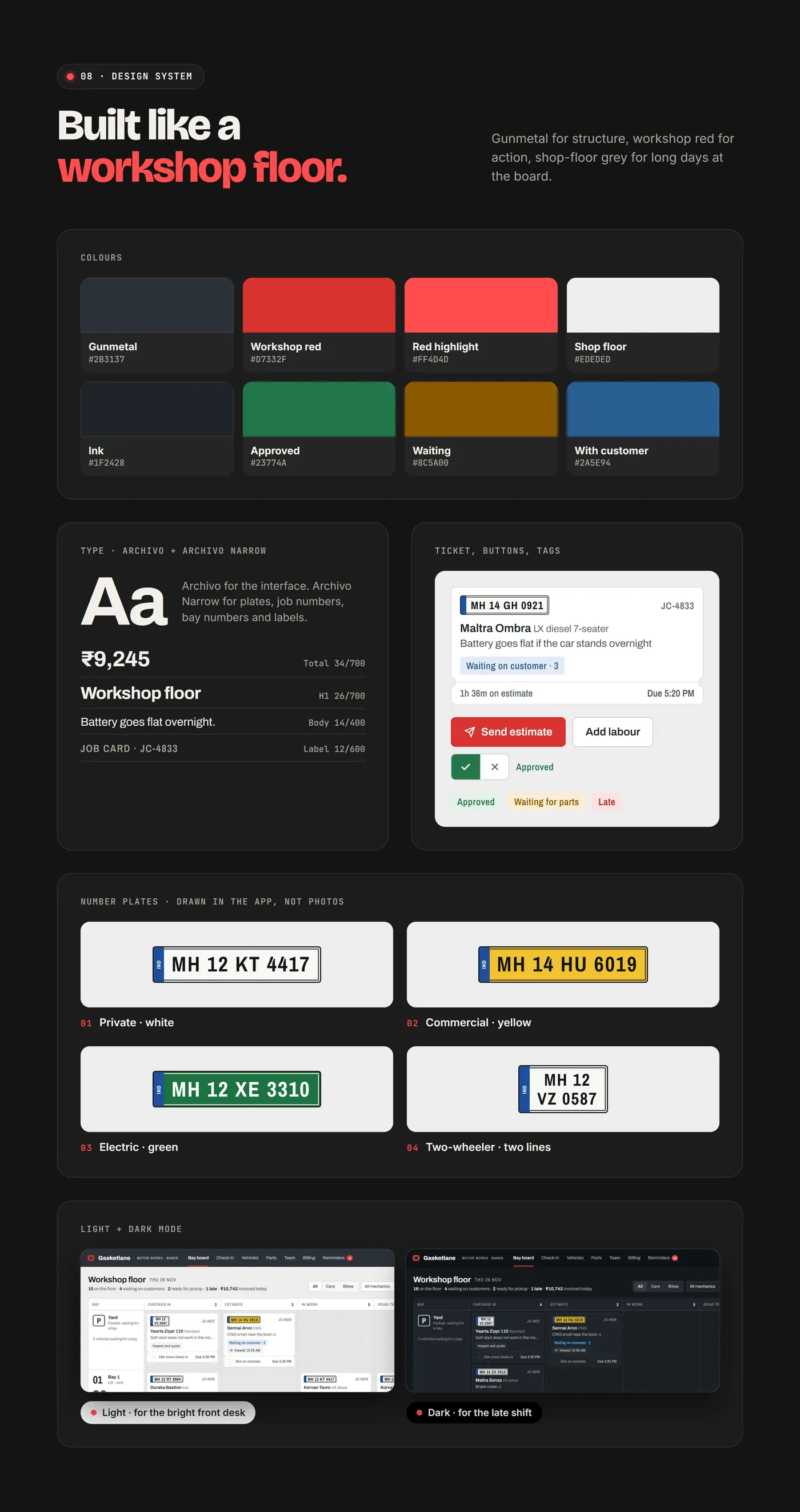
Built like a workshop floor. Gunmetal for structure, workshop red for action, shop-floor grey for long days at the board.
#2B3137#D7332F#FF4D4D#EDEDED#1F2428#23774A#8C5A00#2A5E94Type: Archivo + Archivo Narrow
How it was built
- Plain HTML, CSS and JavaScript: no framework, fast on a phone.
- Built with AI-assisted development: I set the brief, flows and design rules, then directed and reviewed the code.
- Light and dark mode, and layouts for desktop, tablet and phone.
- Sample data that moves with today's date and is saved in the visitor's browser.
- An automated end-to-end test (Playwright) clicks every button, and runs again on fixed dates such as 31 December and 1 April.
- Concept project: the brand, people and data are fictional.
Keep lookingMore case studies
Copperslip
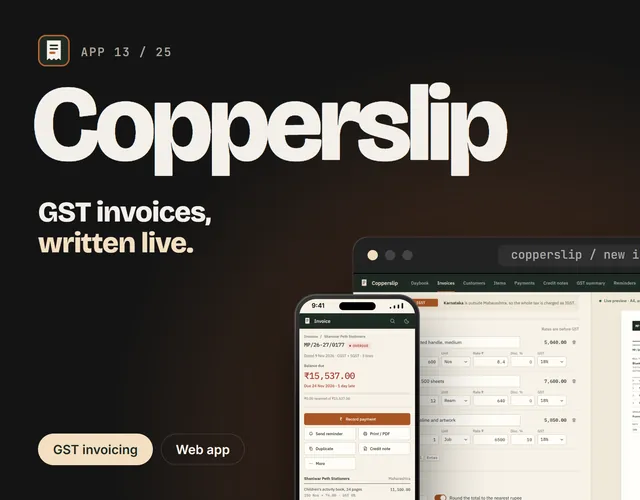
A GST invoicing web app for a small trader or freelancer in India.
Palletspire
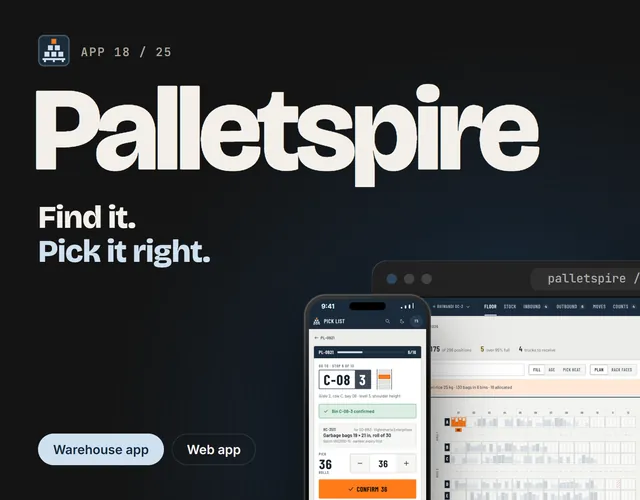
A warehouse inventory web app for a home and kitchen distributor: rack map, receiving, guided picking and cycle counts.
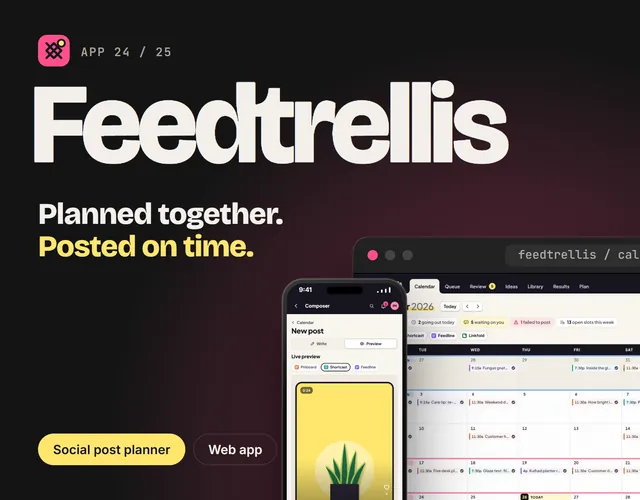
Feedtrellis
A social media post planner for a small brand team: calendar, composer, approvals and a posting queue.