Case study · Logistics · 2026
Palletspire.
A warehouse inventory web app for a home and kitchen distributor: rack map, receiving, guided picking and cycle counts.
Overview
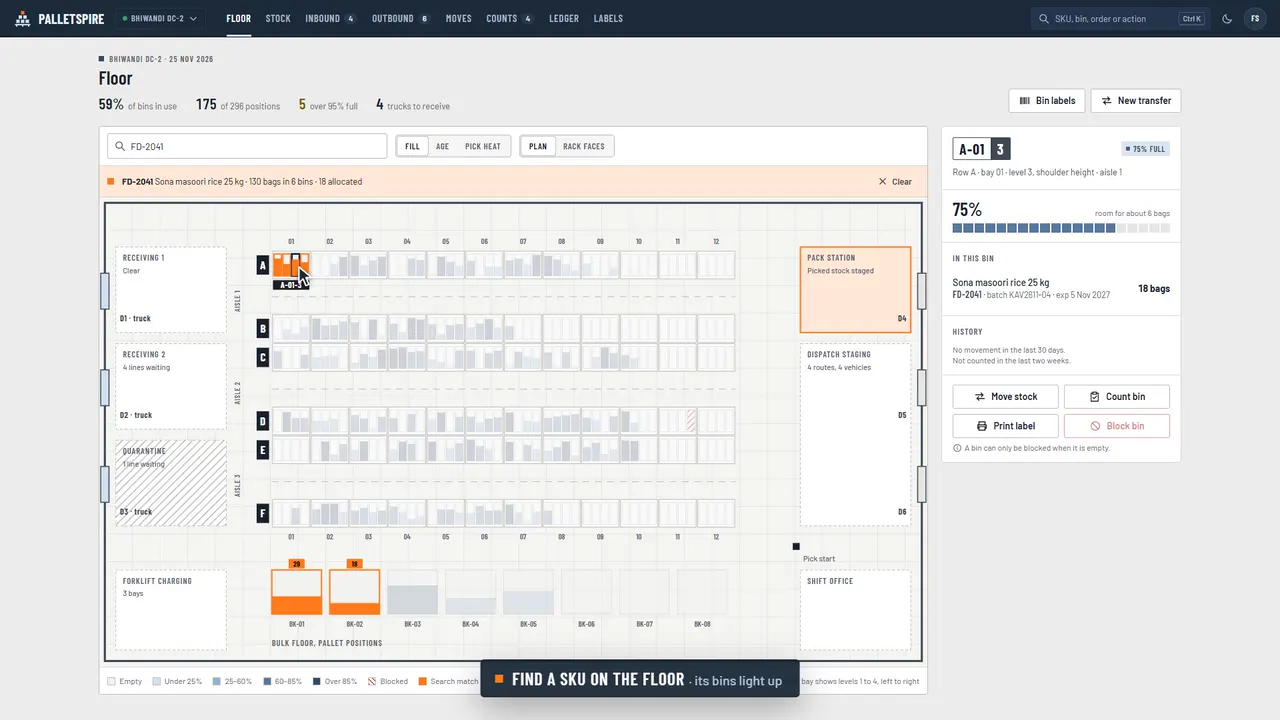
A rack map that lights up, stock by bin and batch and a handheld pick flow for one distributor's warehouse, in a single web app. Plus receiving, put-away, pack and dispatch, cycle counts and a movement ledger.
Who is it for?
Problem → solution
Everyday pains on a distributor's warehouse floor, and what the app does about each one.
- Problem 01
Stock is in the system, but nobody can find the pallet.
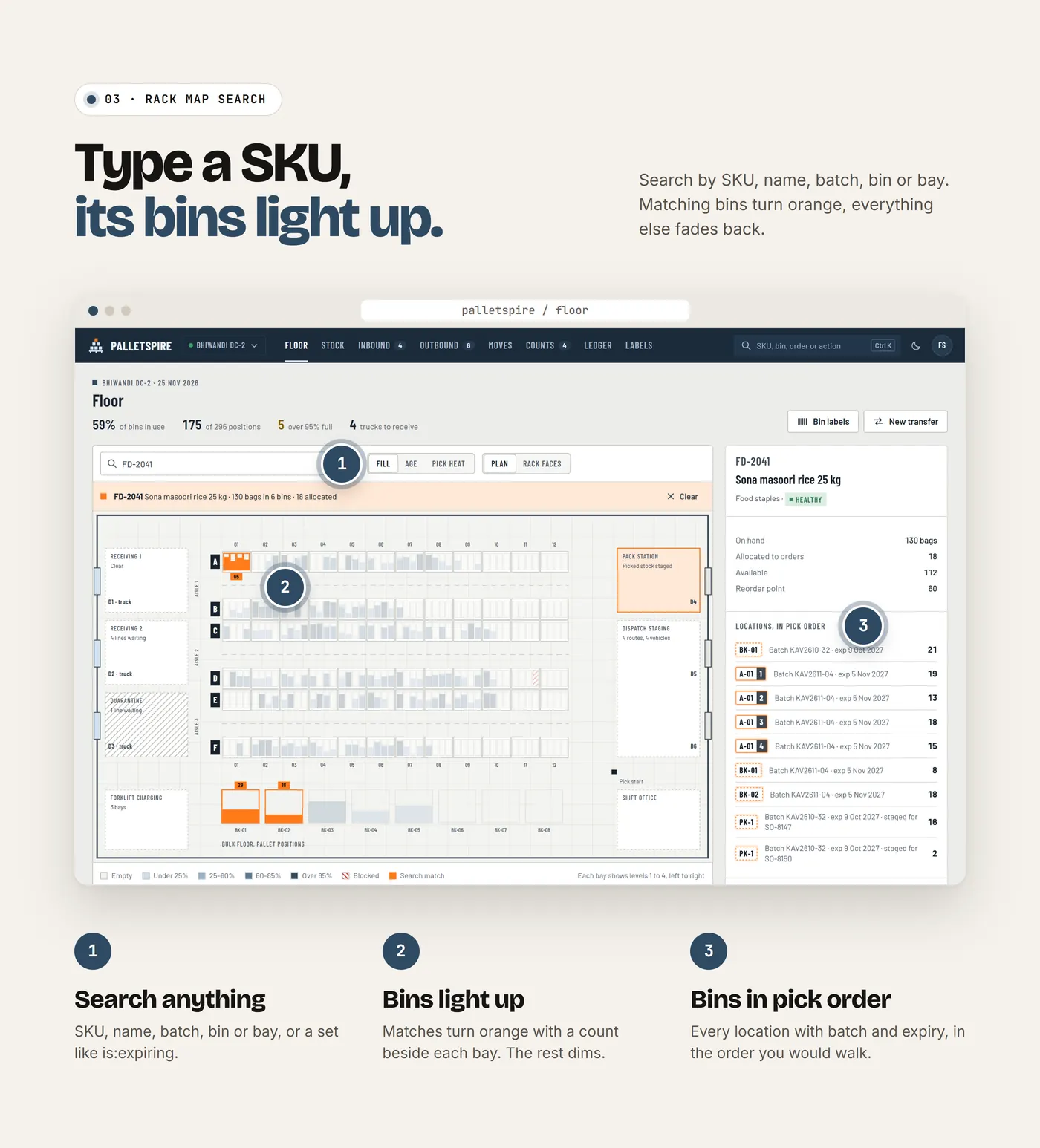
What the app doesType a SKU, name or batch. Its bins light up on the rack map.
- Problem 02
Received goods wait at the dock while someone hunts for space.
What the app doesPost the GRN against the PO. Put-away bins are suggested for every line.
- Problem 03
Paper pick lists lead to wrong bins and shortages found at dispatch.
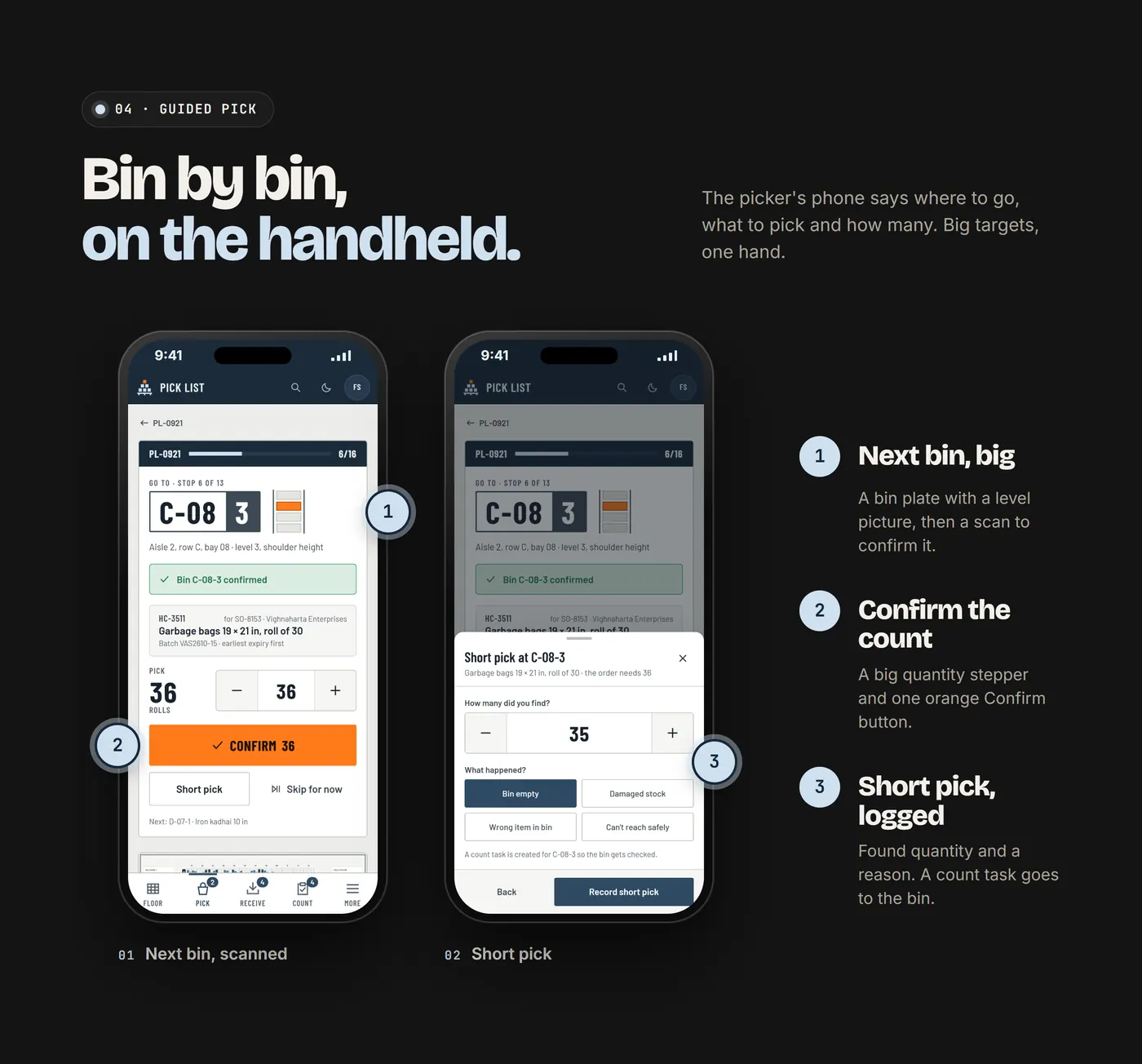
What the app doesThe handheld walks the picker bin by bin. A short pick is logged on the spot.
Key features
Type a SKU, its bins light up.
Search by SKU, name, batch, bin or bay. Matching bins turn orange, everything else fades back.
Bin by bin, on the handheld.
The picker's phone says where to go, what to pick and how many. Big targets, one hand.
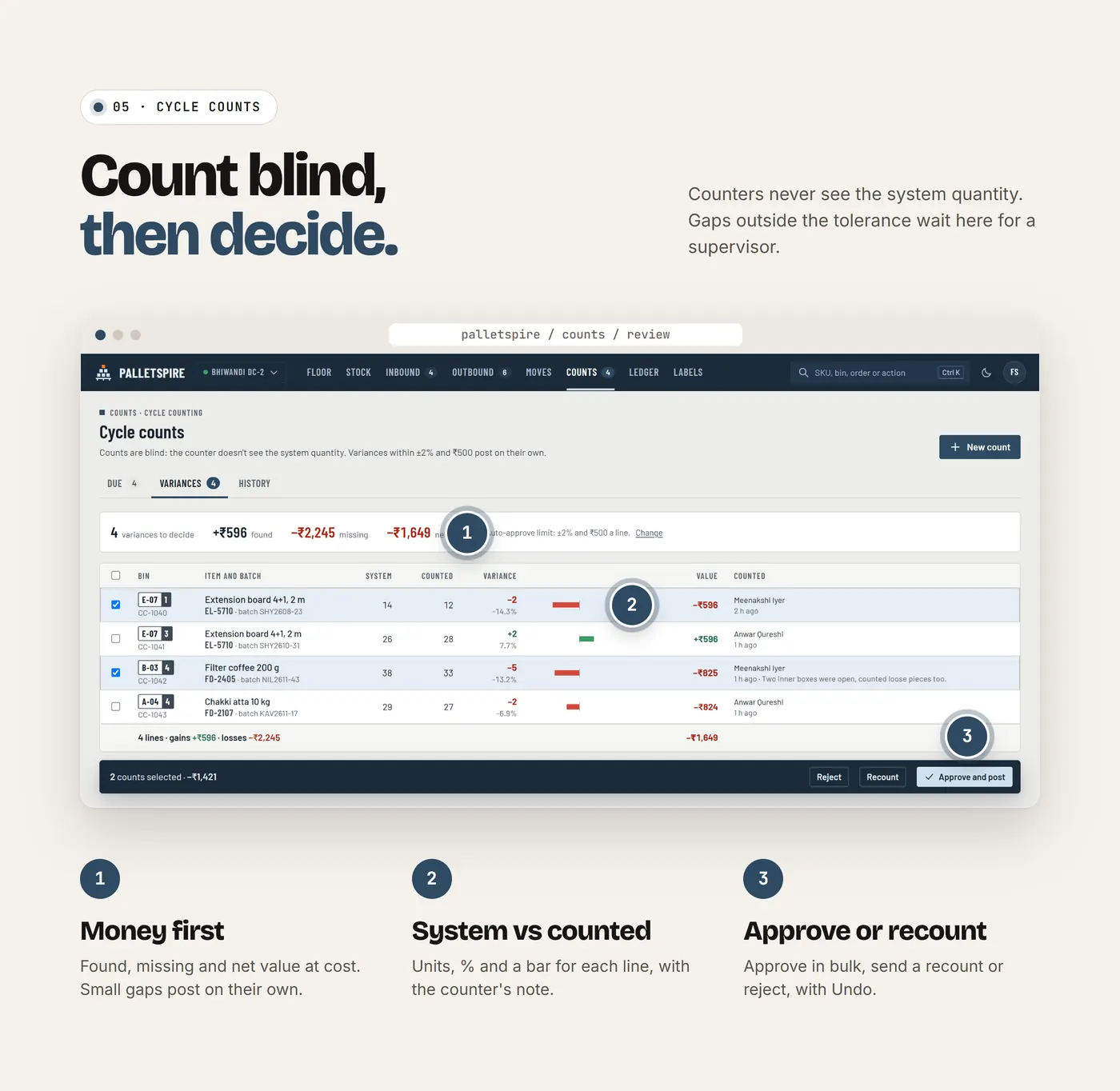
Count blind, then decide.
Counters never see the system quantity. Gaps outside the tolerance wait here for a supervisor.
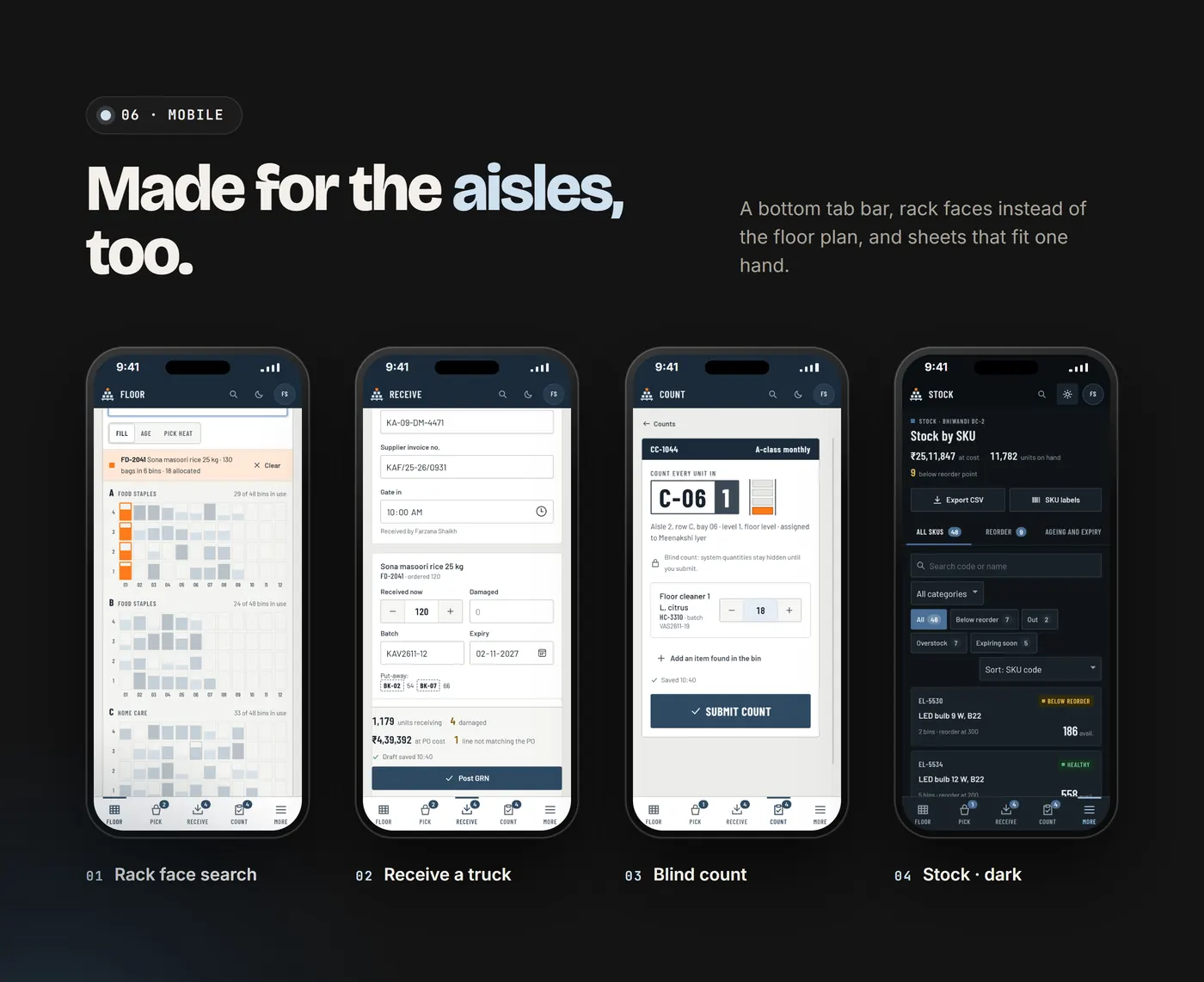
On a phone
Made for the aisles, too. A bottom tab bar, rack faces instead of the floor plan, and sheets that fit one hand.
Design system
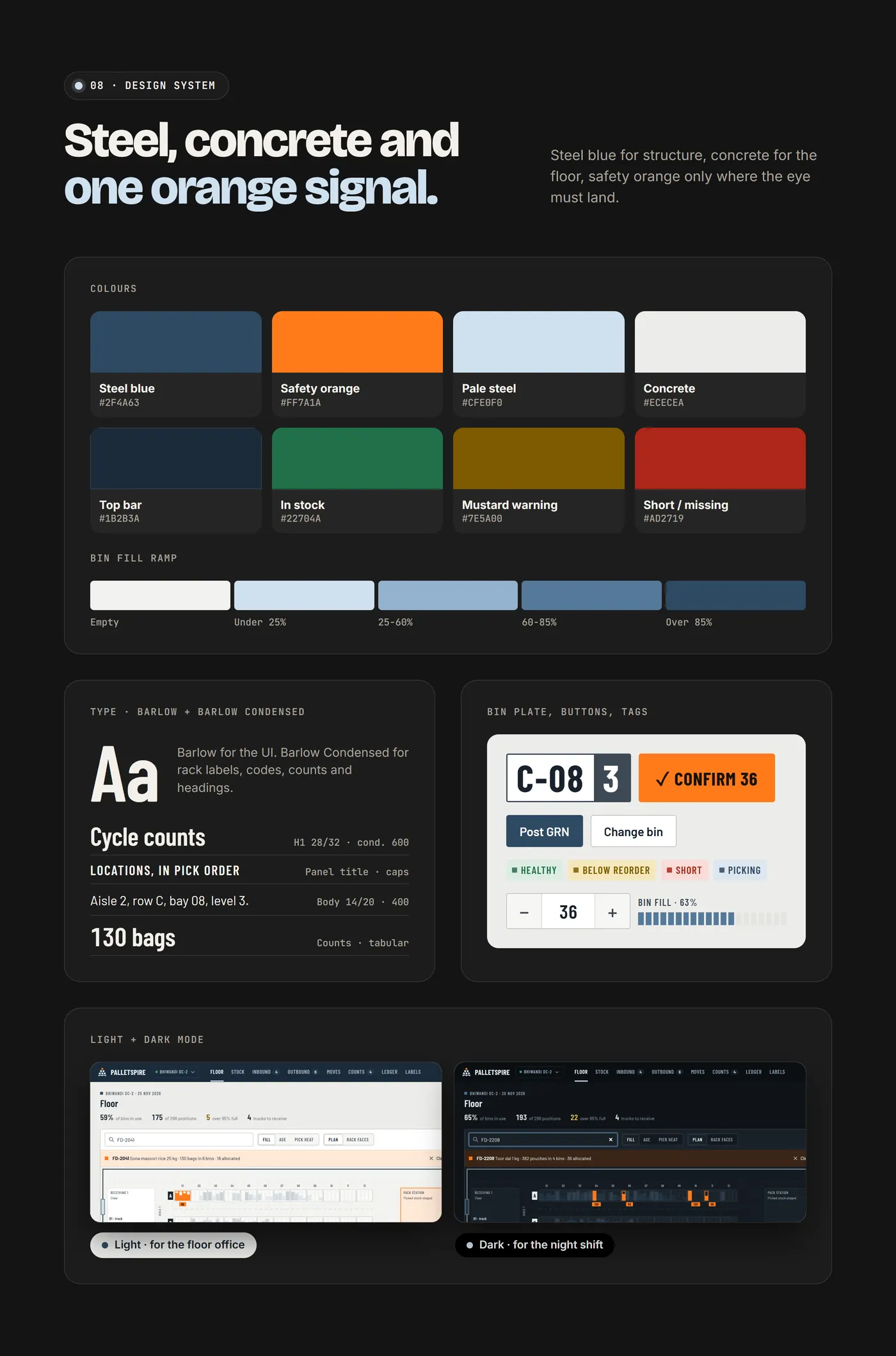
Steel, concrete and one orange signal. Steel blue for structure, concrete for the floor, safety orange only where the eye must land.
#2F4A63#FF7A1A#CFE0F0#ECECEA#1B2B3A#22704A#7E5A00#AD2719Type: Barlow + Barlow Condensed
How it was built
- Plain HTML, CSS and JavaScript: no framework, fast on a phone.
- Built with AI-assisted development: I set the brief, flows and design rules, then directed and reviewed the code.
- Light and dark mode, and layouts for desktop, tablet and phone.
- Sample data that moves with today's date and is saved in the visitor's browser.
- An automated end-to-end test (Playwright) clicks every button, and runs again on fixed dates such as 31 December and 1 April.
- Concept project: the brand, people and data are fictional.