Case study · HR · 2026
Rosterwick.
An attendance and payroll web app for a small business with shift staff, from punch in to payslip.
Overview
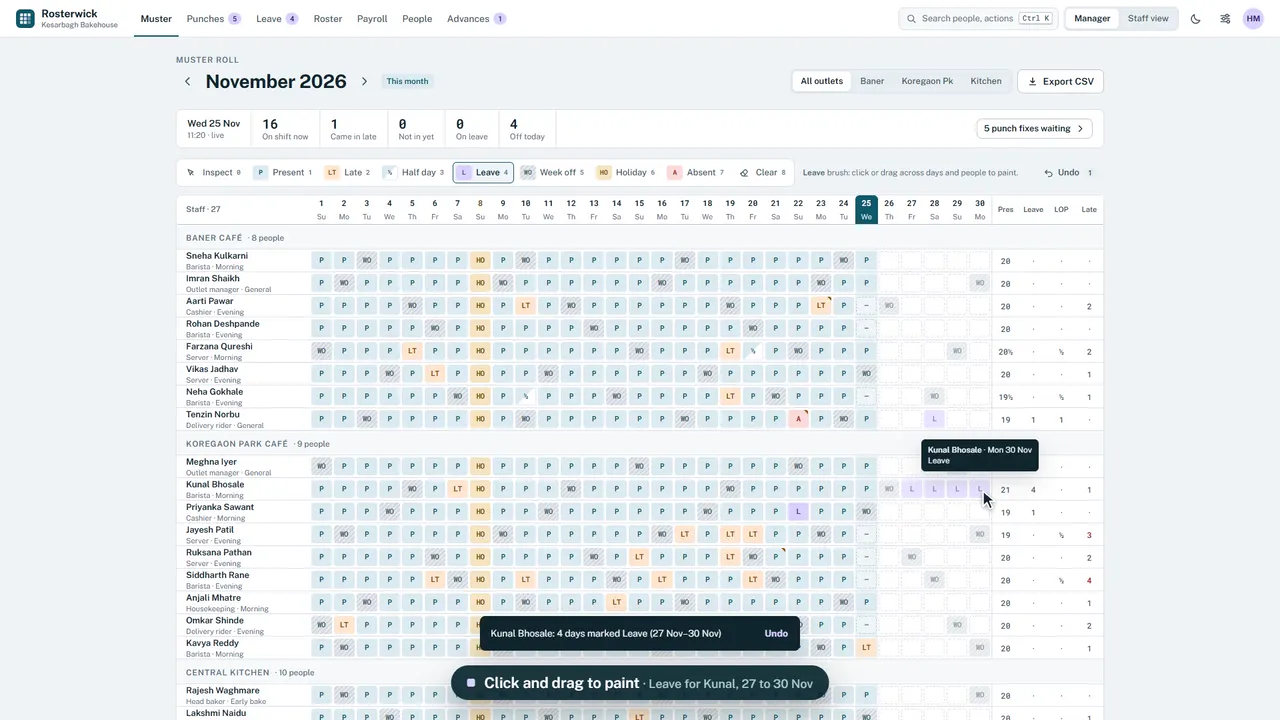
A muster roll you paint, a punch clock and a payroll run for one small business with shift staff. Plus leave, rosters, advances and payslips.
Who is it for?
Problem → solution
Everyday pains of paying a shift team, and what the app does about each one.
- Problem 01
Attendance sits in a paper register, and month end means copying it out.
What the app doesOne grid for the whole month. Click or drag across days and people.
- Problem 02
Forgotten punches turn into arguments on payday.
What the app doesStaff ask for a fix with a reason. The manager approves it in one tap.
- Problem 03
Net pay changes every month, and nobody can say why.
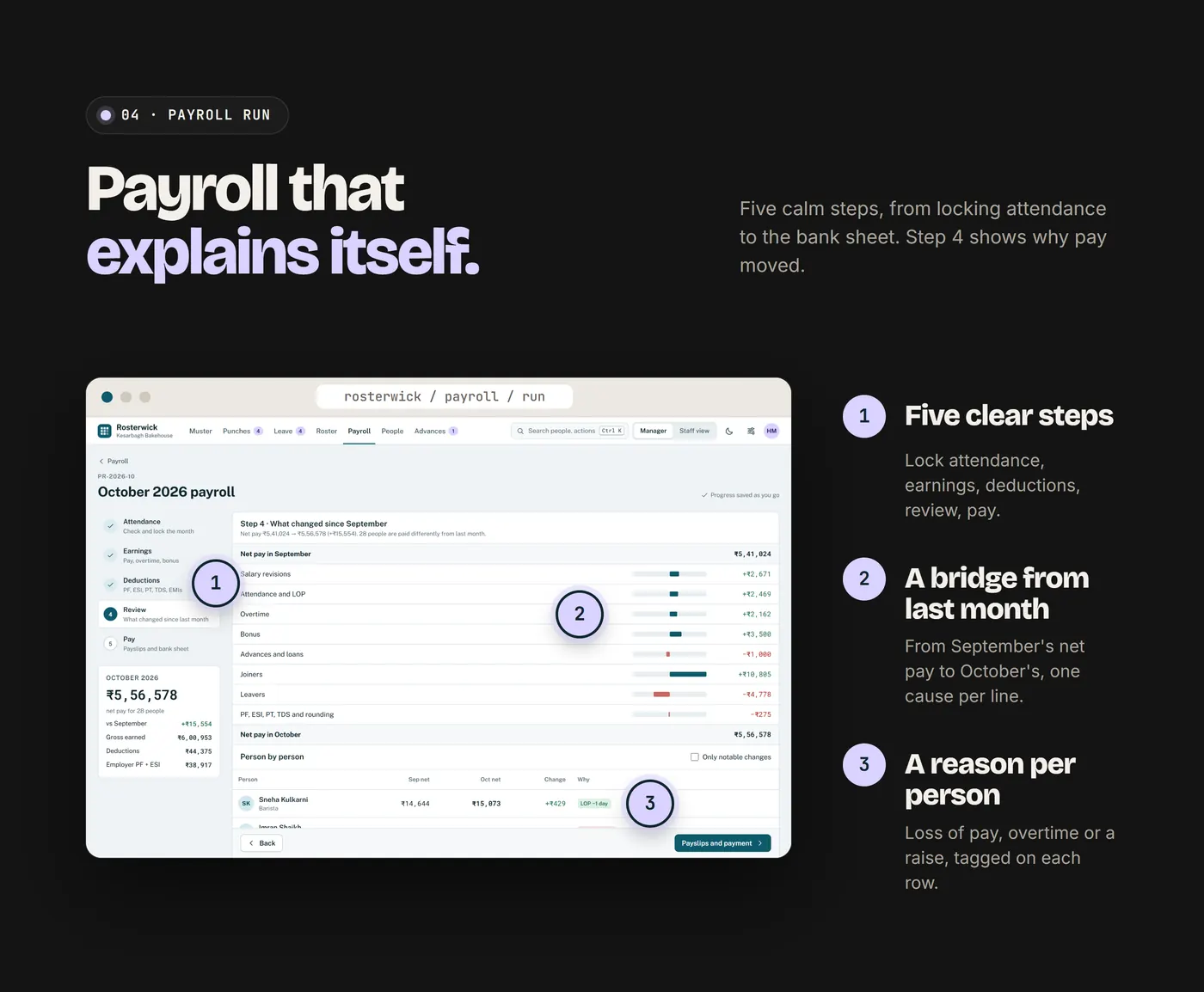
What the app doesEach run shows what changed since last month, line by line.
Key features
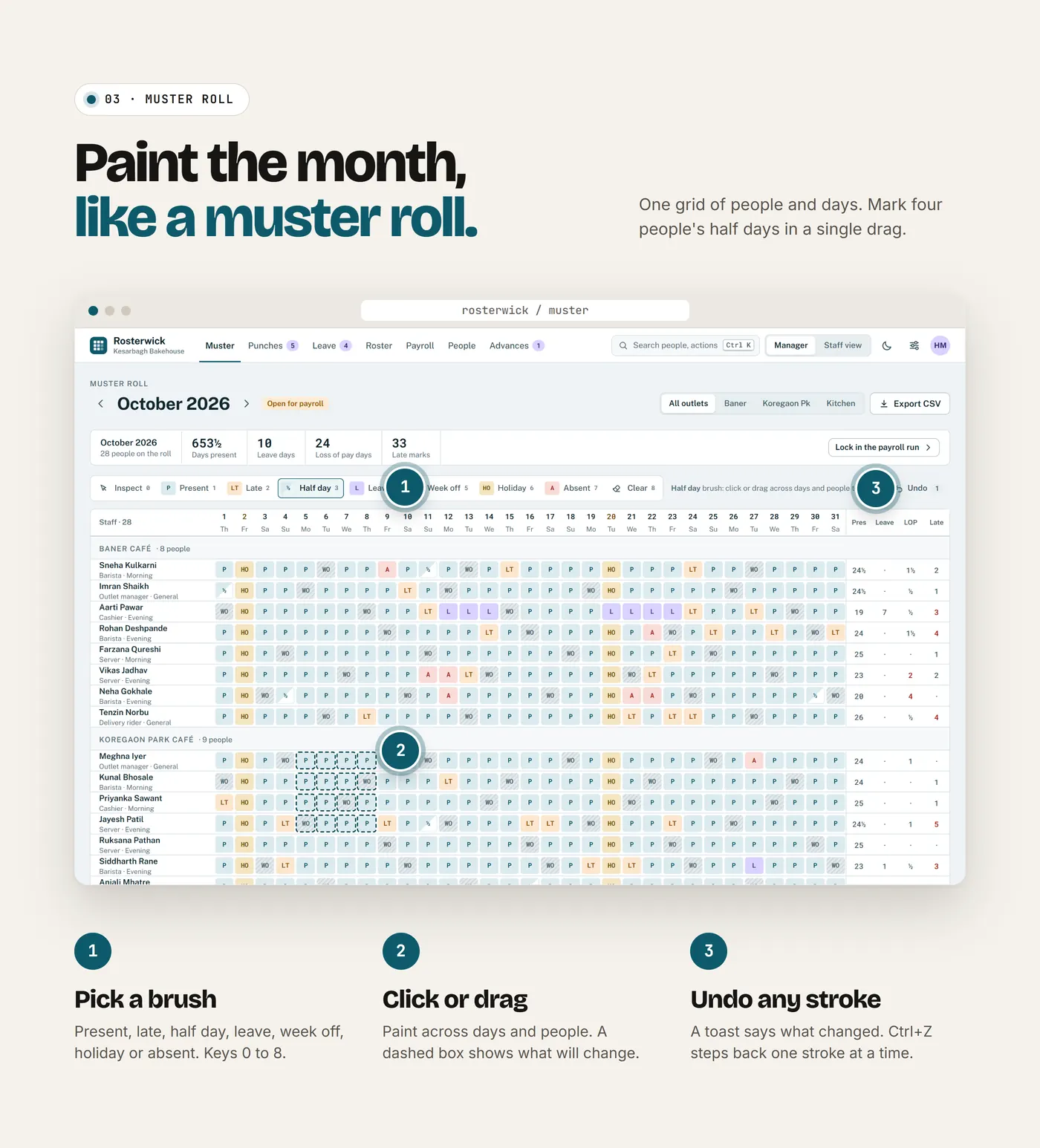
Paint the month, like a muster roll.
One grid of people and days. Mark four people's half days in a single drag.
Payroll that explains itself.
Five calm steps, from locking attendance to the bank sheet. Step 4 shows why pay moved.
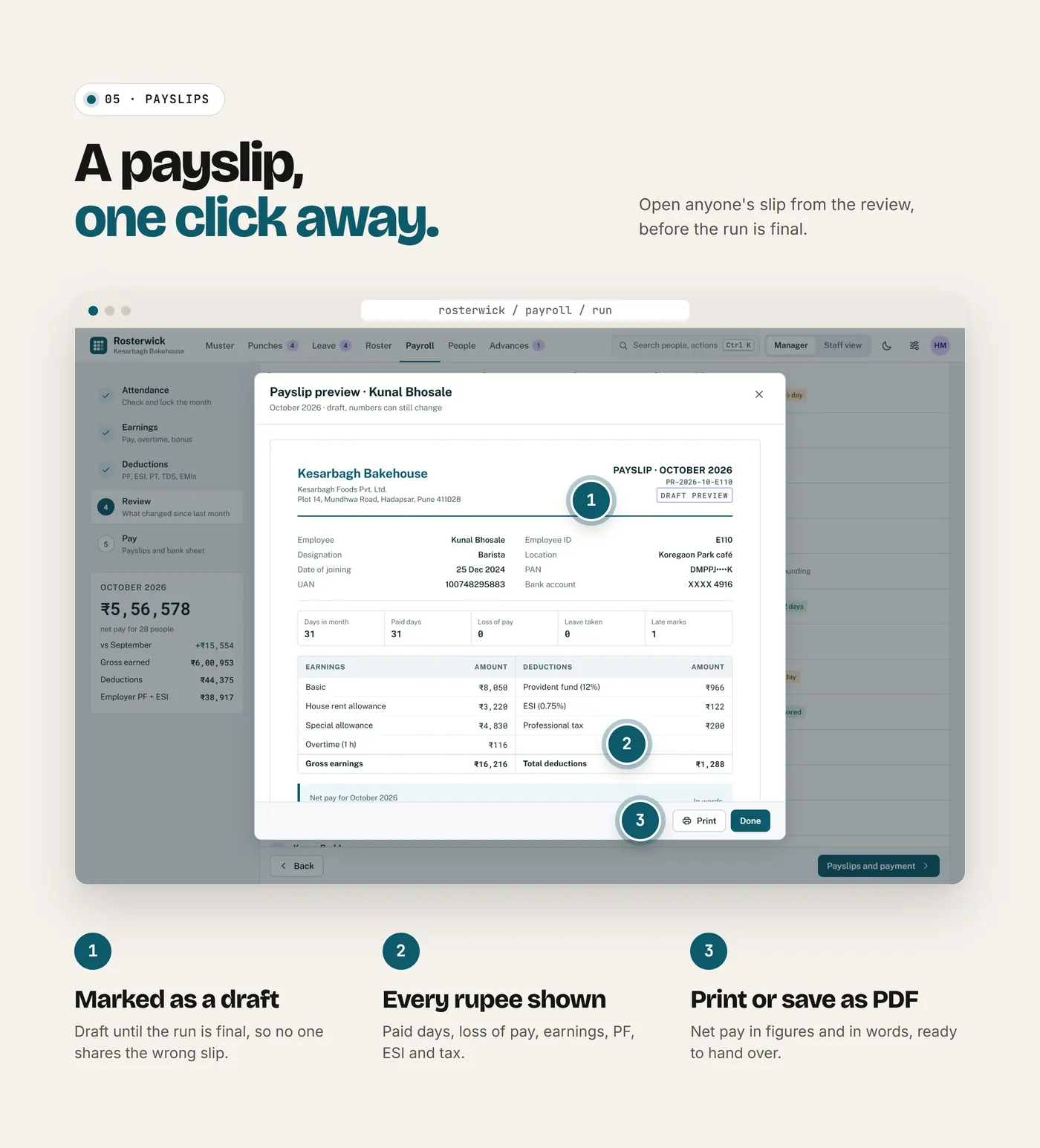
A payslip, one click away.
Open anyone's slip from the review, before the run is final.
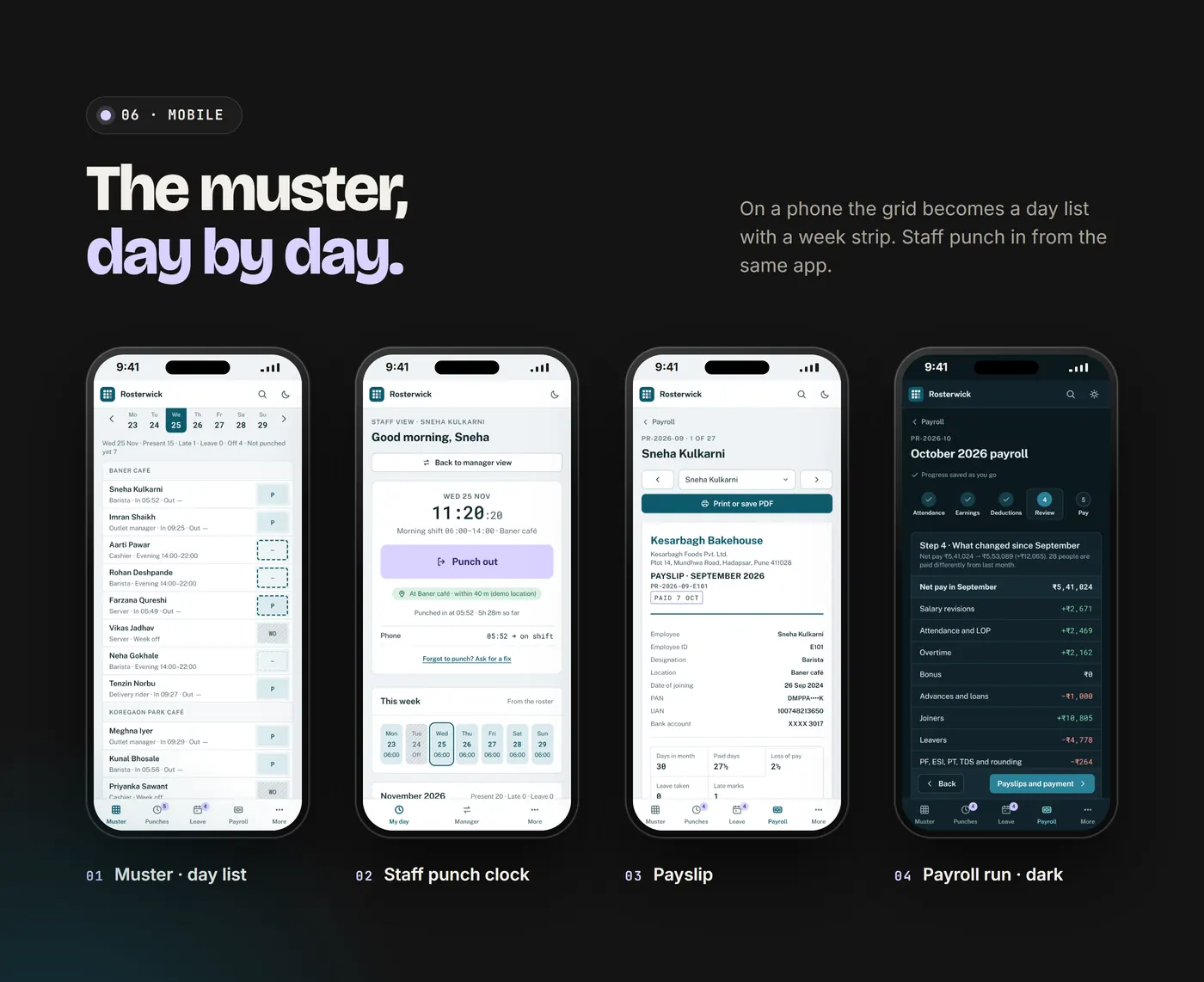
On a phone
The muster, day by day. On a phone the grid becomes a day list with a week strip. Staff punch in from the same app.
Design system
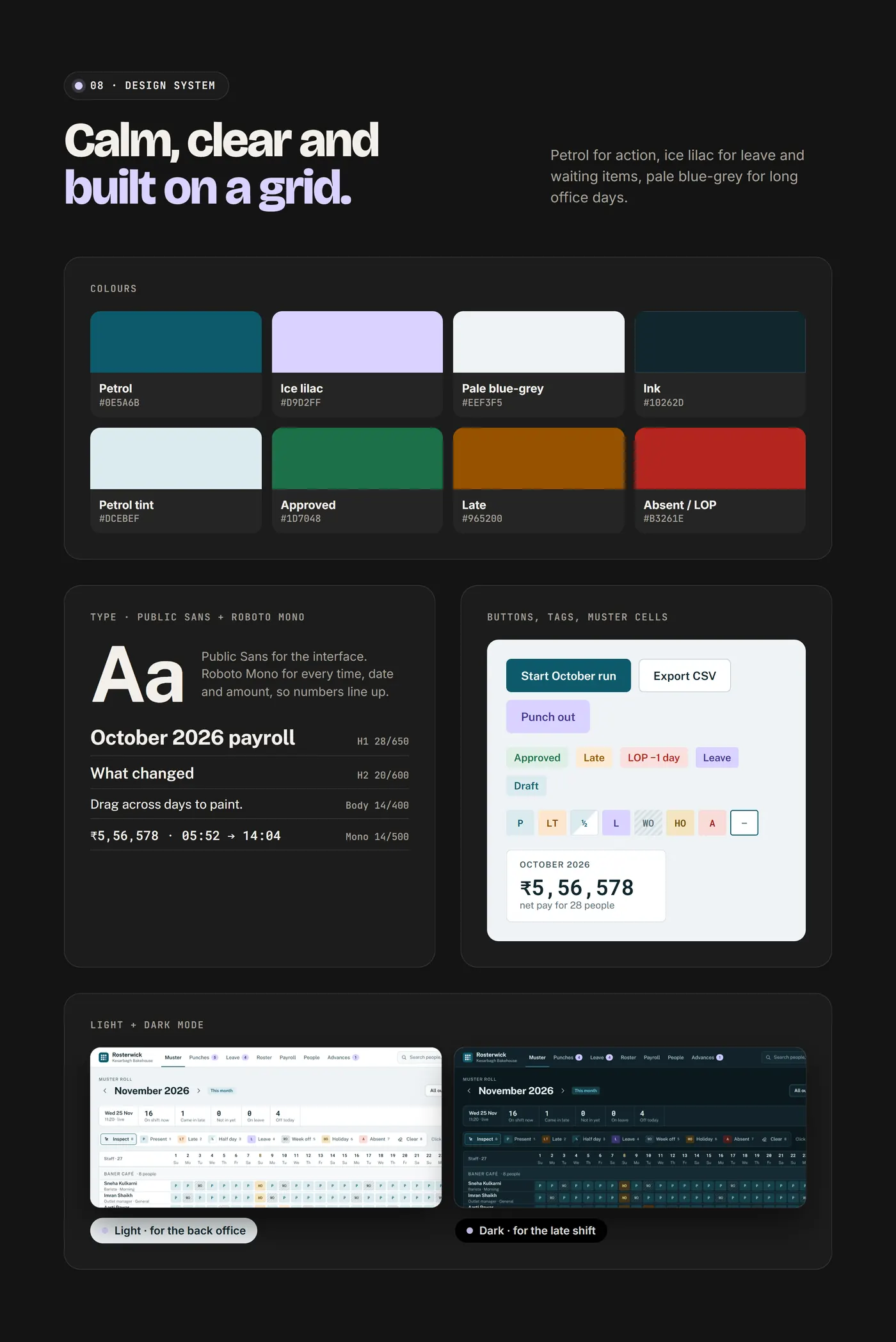
Calm, clear and built on a grid. Petrol for action, ice lilac for leave and waiting items, pale blue-grey for long office days.
#0E5A6B#D9D2FF#EEF3F5#10262D#DCEBEF#1D7048#965200#B3261EType: Public Sans + Roboto Mono
How it was built
- Plain HTML, CSS and JavaScript: no framework, fast on a phone.
- Built with AI-assisted development: I set the brief, flows and design rules, then directed and reviewed the code.
- Light and dark mode, and layouts for desktop, tablet and phone.
- Sample data that moves with today's date and is saved in the visitor's browser.
- An automated end-to-end test (Playwright) clicks every button, and runs again on fixed dates such as 31 December and 1 April.
- Concept project: the brand, people and data are fictional.
Keep lookingMore case studies
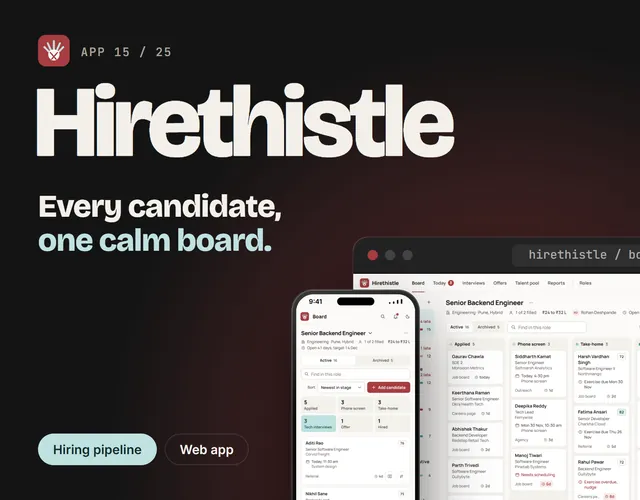
Hirethistle
A hiring pipeline for a 40-person company: roles, a stage board, interviews, scorecards and offers.
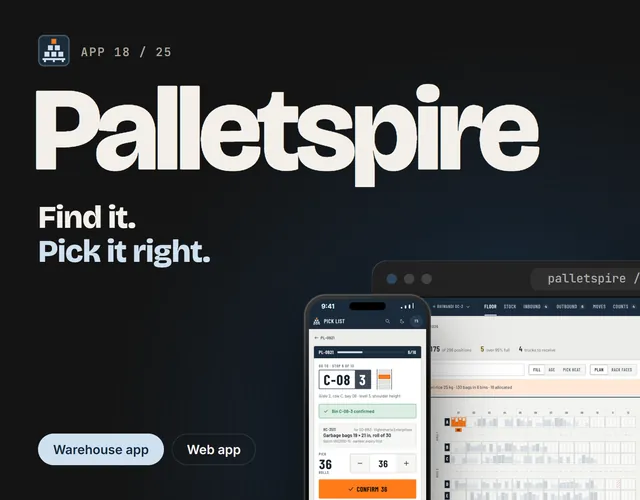
Palletspire
A warehouse inventory web app for a home and kitchen distributor: rack map, receiving, guided picking and cycle counts.
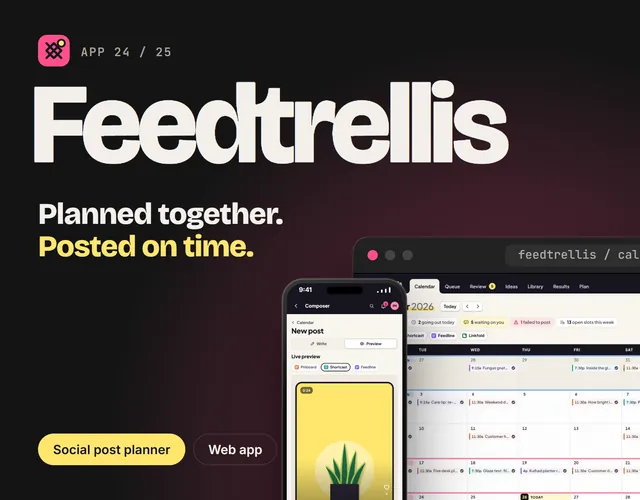
Feedtrellis
A social media post planner for a small brand team: calendar, composer, approvals and a posting queue.